A New Video Podcast Experience is Coming to Apple Podcasts
On Monday Apple announced a “transformative update” is coming to Apple Podcasts this spring. Currently in developer beta, iOS 26.4 includes a new implementation of Apple’s HTTP Live Streaming (HLS) tech. As James Cridland explains in his comprehensive breakdown, the previous existing method for video podcasting on Apple Podcasts required creators to run a second feed for a video version of the podcast.
With the HLS update, podcasters hosting with supported hosting companies will have the ability to publish video versions of the same show that play alongside the audio natively within Apple Podcasts. In this new method, the podcast hosting provider connects to Apple Podcasts using a special API that reads an HLS playlist URL housing the episodes.
The current list of podcast hosting companies partnered with Apple to accept video podcasts with the upcoming method are Acast, Art19, Omny Studio, and Simplecast. Apple will not charge hosting providers to distribute with this new HLS process (same as old-school RSS), but later this year they will begin charging participating ad networks an impression-based fee for dynamically-inserted ads in HLS video Apple Podcasts.
Analyst Adam Bowie weighed in on the announcement, finding interest in how financial relationships will change as Apple’s new HLS method gains traction, and as dynamically inserted ads become more commonplace in video podcasting overall. A landscape so nuanced, Bowie created a flow chart to demonstrate the differences in audio and video distribution.
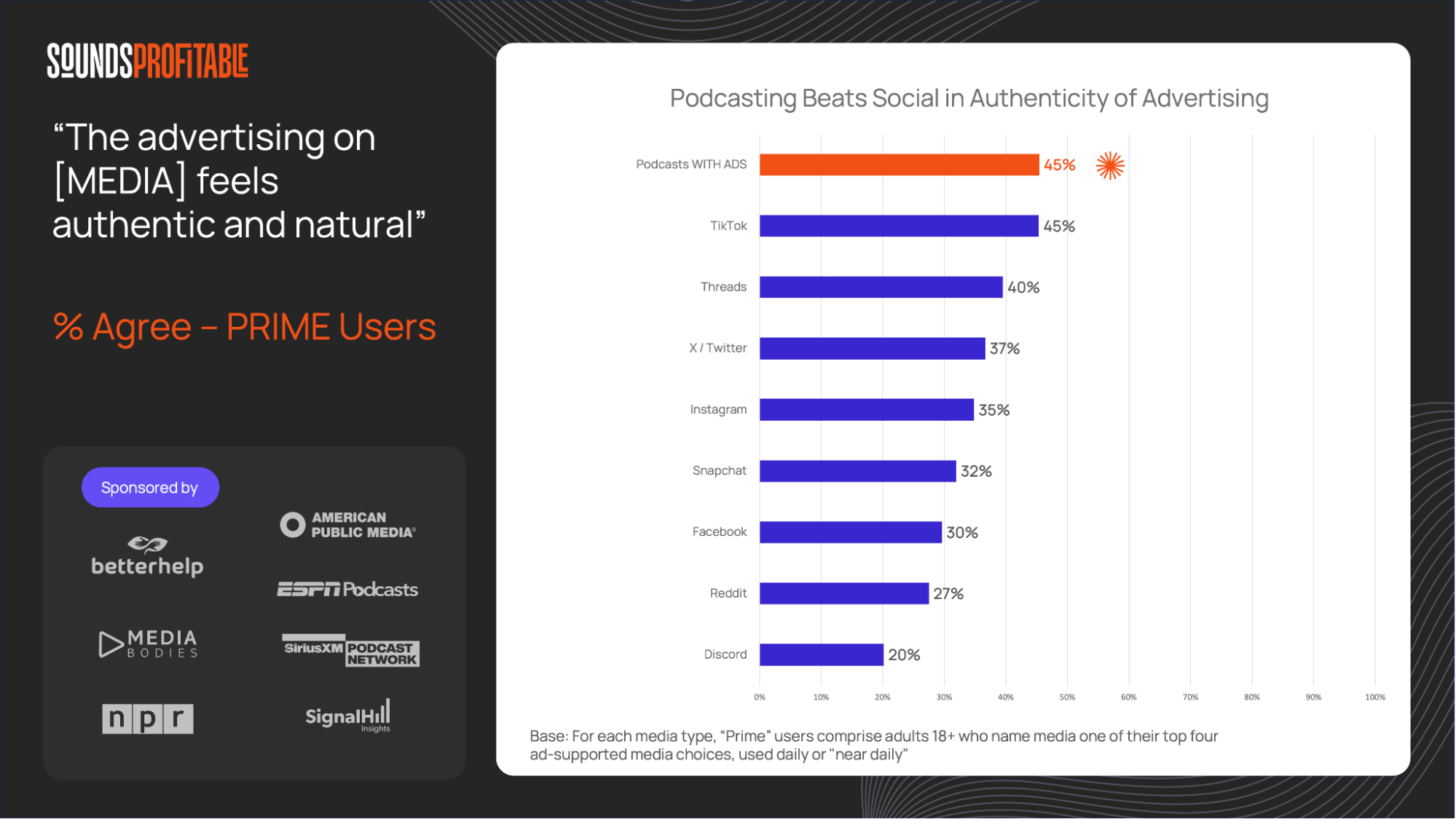
Zooming out to the bigger picture: any time one of the big three distributors in podcasting makes a big move like this, there’s a temptation to frame it as a zero-sum game. Platforms will chase each other. Tom Webster, in a new Sounds Profitable article, proposes it’s more of a benefit for the entire field. Data from The Podcast Landscape shows nearly 80% of Apple Podcasts users expect their podcasts to be audio-first. Which makes sense; YouTube started as a video platform, Spotify started with music, and Apple Podcasts started with audio podcasts.
The Landscape study also shows 42% of Apple video podcast consumers spend more than half their time watching video instead of audio. That’s a sizable baked-in audience of people who already want video. Apple bringing video more into Apple Podcasts isn’t an instance of converting new audiences, it’s connecting the plumbing to serve existing ones. All three major podcast platforms (with their respective different audience compositions) serve as on-ramps for people new to podcasting. Instead of a zero-sum wrestling game between three companies, it’s an overall wider funnel for the medium of podcasting itself.
Partner Highlights Roundup
Semi-regularly, Sounds Profitable will venture out to conduct interviews and see what’s up with folks around the business of podcasting. This week I’ve got four new ones to spotlight.
Catherine Browne, VP of Revenue and Partnerships at The Roost, shares her experience with a marketing campaign involving Theo Von, a silent polar bear, and zero-sugar soda. To expand the footprint of their Super Bowl ad, Pepsi got in touch with The Roost to set up an ad campaign in which podcaster Theo Von interviews a polar bear that prefers Pepsi Zero Sugar to Coke Zero. Browne shares the process of how the ad came together, and how mutual trust was established between the brand and creator to create ads that feel like a normal podcast clip.
Gretchen Smith Dubois, VP of Media at Ad Results Media, broached how busy 2026 already has been for the podcast world. For instance, YouTube’s recent decision to reverse years of restrictive policy on certain topics, allowing videos discussing those topics to now be monetizable. She shares perspective as someone with experience on both sides of the brand safety and suitability fence about what this decision, made with creator feedback and internal review, says about the larger use of brand safety with “dangerous” content.
Thomas De Napoli, VP Head of Sales & Underwriting at American Public Media and Minnesota Public Radio, sat down to talk about the business side of the world’s eyes being on Minnesota. With the ongoing news developments in Minnesota in general, and Minneapolis specifically, MPR journalists have been working hard. From the business side, De Napoli speaks to the trust public media has built with advertisers over the years with that journalism. Trust to the point that, when MPR announced it was doing nightly call-in shows so journalists and community members could report on local developments, advertisers were signing up to fill slots less than 12 hours after seeing the initial brief.
Roger Nairn, Co-Founder and CEO of JAR Podcast Solutions likes to process grief by talking it out. Which dovetails into his new podcast Dead Dads, in which he and co-host Scott Cunningham discuss their shared experience of having lost their fathers. As the show pitches: death, jokes, closure. Nairn shares his experience getting to be back in front of the mic after playing CEO for so long, as well as his goals for building a community of men who feel comfortable discussing grief.
Triton Digital Releases 2025 U.S. Podcast Report
This year’s U.S. Podcast Report is built from IAB Tech Lab-certified Podcast Metrics, data from leading hosting platforms, and Triton Digital Demos+ surveys of 12,000+ monthly podcast consumers. Reach continues to grow across demographics, with the report finding listeners over-index in 18-34-year-olds, college graduates, high-income households, and diverse audiences. Audio-only consumption sits at just under 13% of respondents aged 18+, with video-only sitting at 7%.
The diversity of podcasting’s audience remains a highlight. The report argues the both size and diverse nature of said audience is “creating new high-value advertising opportunities for certain brand verticals, with data showing that new podcast listeners differ meaningfully from long-time listeners in their shopping behaviors and purchase intent.” Specific examples of verticals include retail, quick-service restaurants, wireless, and ecommerce.
Format consumption preferences prove to vary by genre. For primary audio consumption, the genres Science (58%), History (56%), Fiction (54%), Arts (51%), and True Crime (50%) make up the top five. Meanwhile, the top five genres for video-exclusive audiences are Music (34%), Sports (32%), Kids & Family (31%), Comedy (30%), News (30%). The high ranking of music with video podcast consumers makes sense, and re-affirms Tom Webster’s open call to address audio podcasting’s music licensing issues. Music as a topic is massive on YouTube. The video world has more leeway to produce content about and containing licensed songs, while audio podcasting hasn’t had much of a chance to embrace it.
Putting podcasts to work by Laura Williams-Tracy
It’s commonplace for podcast advertising to sell itself on how podcasts are great at targeting niche audiences. This piece from the Charlotte Business Journal serves as anecdotal backup that it’s still happening. Williams-Tracy writes about how Charlotte, NC brands are embracing the advertising capabilities of podcasting by starting their own shows.
Generally, stories about doctors finding patients thanks to a promotional podcast come from major metropolitan areas with populations of millions. Charlotte, by comparison, has only grown past 900,000 residents in the past six years. Not a small town, but also not New York City. Which speaks all the more to podcasting’s ability to reach niche audiences when a local plastic surgery outfit invests heavily in a podcast. According to Williams-Tracy, Graper Harper Cosmetic Surgery pivoted from hosting free seminars to try and court new patients to producing a podcast featuring two of their doctors.
And in the B2B sphere, there’s National Gypsum. Based in Charlotte, the national construction material company has launched a podcast about construction. In essence, a show designed to target potential customers with something they can listen to while traveling to work sites.
As for the rest of the news…
- Podcast Movement has just unveiled a nifty tool allowing you to upload a headshot or selfie and have it automatically placed in a graphic announcing you’re attending Evolutions by Podcast Movement programming at SXSW
- CoHost has rolled out a new integration with Salesforce, allowing users to sync podcast data into their CRM.
- Mark your calendar for Wednesday, February 25th, at 3:30 p.m. GMT for AudioStack’s new FastTrack webinar Sound & Secure: Trust, Safety & Ethics in the age of AI Transformation.
- Audion has launched Audion AI, a tool designed to address the fragmented nature of podcast measurement.
- Justin Jackson of the Podcast Standards Project has a new post explaining the current goals of the PSP, as well as how they plan to pursue those goals and affect change in the wider industry.