Sounds Profitable Business Summit
The inaugural Sounds Profitable Business Summit takes over Terminal 5 in New York City on September 14-15. This exclusive, partner-only event brings together the industry's top brands, agencies, publishers, and platforms for two days of research-backed insights, strategic conversations, and meaningful networking. Already a Sounds Profitable Partner? Claim your ticket today. Not a partner yet? Become one now to buy your Summit pass and join the conversation shaping what's next in podcast advertising.
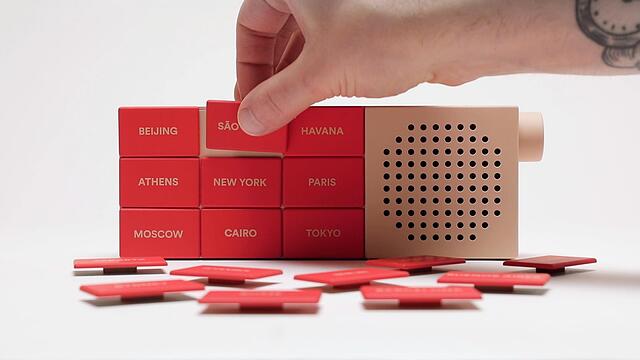
A few years ago, Tamsen and I were poking around one of those interior design stores where everything is beautiful and nothing is necessary, and I very nearly bought a radio. Not a vintage radio, and not a good radio, exactly. The CityRadio, from an Italian design house called Palomar, has no dial. Instead: nine buttons in a three-by-three grid, each fitted with a removable magnetic nameplate bearing the name of a city. Press Moscow, get a station in Moscow. Press Tokyo, get Tokyo. You set the whole thing up once with an app on your phone, and then the phone went back in your pocket and the radio just sat there on a shelf, being a radio and doing radio things.
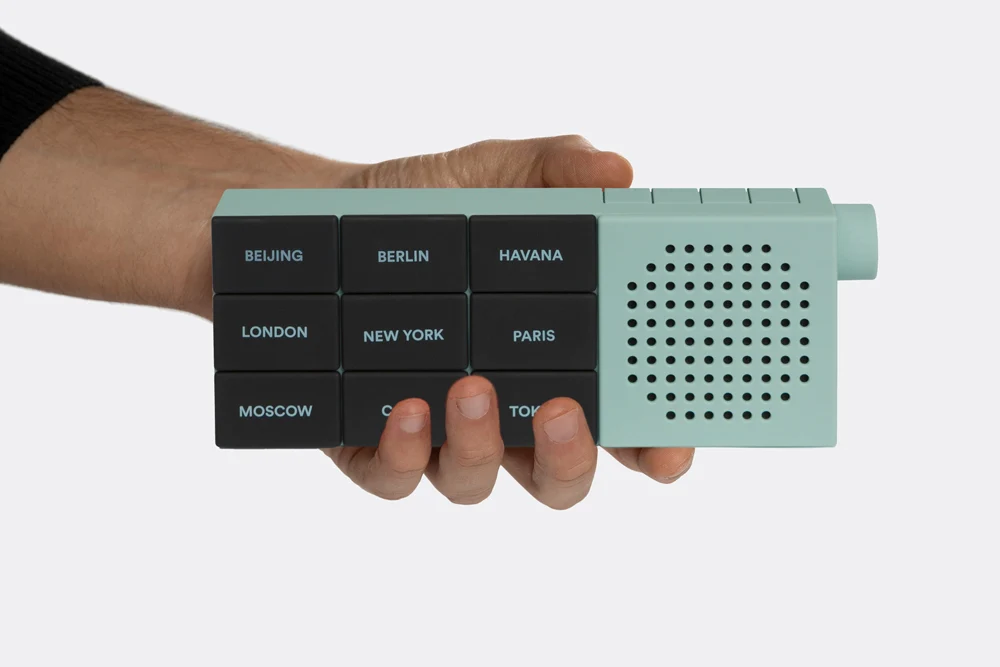 By any rational measure this is a stupid product: an internet radio, a gateway to tens of thousands of stations, deliberately crippled down to nine choices. I did not buy it, and I have thought about it roughly once a month ever since. Because the thing I wanted was not the radio. It was built for those times in my day when I just want something to listen to and I don’t know what I want. Somebody had taken the infinite and reduced it to a row of buttons, and every fiber of my listening self understood that I would press those buttons constantly, in a way that I will never, ever “explore global radio” through an app.
I checked, by the way. Palomar still sells the CityRadio. The companion app sits in the app stores with a two-star rating and reviews full of people who can’t get it to connect. The appliance has outlived its own software. Hold that thought.
I was thinking about the CityRadio over the weekend because one of the great laments of the podcaster is how hard it is to get discovered, and the CityRadio points at a solution podcasting has never had: a default. We have spent 20 years explaining that podcasting offers audiences more choice than any other medium, but sometimes people just want a damn button. Podcasting doesn’t have a button.
The greatest button in radio history
The purest expression of the button I’ve ever encountered was in Philadelphia in the ’80s. Jerry Lee, the legendary owner of what Philadelphia knew variously as EAZY 101 and eventually B101, used to give away radios to doctors’ offices and workplaces around the market, pre-tuned to 101.1. No dial. No buttons. You turned it on and you got Jerry Lee’s radio station, and that was the entire feature set. Sounds dumb, right? Even dumber than the CityRadio.
Jerry Lee was not dumb. His goal was workplace listening, which could buy you giant, uninterrupted blocks of time spent listening in the (then) Arbitron ratings. EAZY 101 was the number one station in Philadelphia by 1984. And my favorite detail: instructions eventually circulated among the market’s radio partisans for cracking those radios open and detuning them to a competitor. One would even send you a small screwdriver. When your rivals are hacking your giveaway hardware, you have built a default worth stealing.
To be clear, podcasting does not have a “hardware problem.” Podcasting rode the most successful hardware wave in the history of consumer electronics — the smartphone and the earbud carried this medium from hobbyists to a nine-figure audience, and no dedicated podcast appliance was ever needed or wanted.
What podcasting lacks, what it has never once had, is a default. Radio didn’t just have receivers; it had appliances whose only job was radio, whose resting state was radio, where turning the thing on produced sound without a single decision being made. Podcasting has only ever been a tenant, renting space inside a general-purpose device, behind a lock screen, inside an app, at the far end of a chain of choices. Hardware is where defaults live. Defaults are where serendipity lives. And serendipity is the only place a certain kind of listening ever gets discovered.
Every audio boom was a hardware wave
It is not an accident that the medium is named after an iPod, though the pattern is older than almost all of us. Radio did not become a young person’s medium because programmers cracked the youth formula; it became one because of the transistor. When cheap pocket radios hit mass production in the late 1950s, they did something no amount of programming could do: they took radio out of the living room, where Dad controlled the dial of a giant piece of furniture, and put it in a teenager’s bedroom. The Smithsonian’s historians describe it as the first time in history teenagers could listen to their own music with no one to tell them not to. Rock and roll radio, top 40, the entire architecture of youth listening — all of it rode in on a wave of cheap hardware whose only function was radio.
The Walkman did it again for the cassette. (I vividly remember mowing my lawn in northern Maine to “Abacab” until the lawn was throttled within an inch of its life.) The iPod did it for the digital audio file, accidentally birthing our beloved medium and lending it a name that has now outlived the device by more than four years (making podcasting the only medium I can think of named after a gadget you can no longer buy). Then the smartphone did it, biggest of all.
And then the wave ended, and everyone in this industry behaved as if hardware had simply stopped mattering.
Houses used to come with radios
Hard to believe, children, but back in the old-timey days of the 20th century, radio came bolted into things you bought anyway. The car, obviously. But the house, too: the console radio was the hearth of the 1930s living room, midcentury builders wired intercom-radios into kitchen walls, and within my lifetime an ordinary American home held a clock radio on the nightstand, a radio in the kitchen, one in the garage, maybe one in the shower. Best Buy had a radio section.
That installed base has collapsed, and radio usage in the home with it. Edison Research has documented this for years in the Infinite Dial: in 2008, four percent of Americans had no radio at home. By 2022, thirty-nine percent. Among Americans aged twelve to thirty-four, fifty-seven percent now live in a home with no radio in it at all. A majority of young Americans live in homes that contain zero devices defaulting to spoken word. Whatever you believe about the appeal of audio content, that is the environment in which the next generation of listeners is or is not being formed. You cannot stumble onto a medium that has no physical presence in your house.
The one device explicitly marketed as radio’s successor (a countertop appliance, ambient, voice-driven, living where the kitchen radio used to sit) was the smart speaker. And the smart speaker is where the defaults thesis got its cleanest test, because here was a brand-new audio appliance with no history, no presets, nothing to be loyal to. What happened? Podcasting barely showed up. On the ad-supported side of smart speaker listening, AM/FM streams command a majority; podcasts sit at roughly twelve percent.
Why did podcasting lose a device it should have owned? Because voice is the worst interface ever devised for browsing. You cannot skim an infinite catalog out loud. The podcast I used to do with my wife, The Freenoter, was completely unfindable on our Alexa because “freenoter” is not a word (even though I coined it, and I am a Webster, and my family gets to make the words). A smart speaker rewards exactly two kinds of requests: the thing you already know by name, and the thing that requires no name at all. “Play some music.” “Play the radio.” One button’s worth of cognition. Podcasting’s ask (remember a specific show title, correctly, from a library of millions) is a five-decision interface squeezed through a straw. You have to form a sentence akin to an accusation in a game of Clue: “Play this episode of this podcast from this service in the Living Room with the candlestick.” Given a fresh appliance and a blank default, audio behavior snapped straight back to the oldest pattern in the medium: people choose the thing that requires no choosing.
The last bundled radio
Which brings us to the car, the one product in American life that still ships with a radio in it, and therefore (not coincidentally) the place where radio remains strongest. The car didn’t preserve radio listening because the car is somehow spiritually connected to radio. It preserved it because the receiver came bolted in, pre-tuned, one button deep, for humans who have to concentrate on the road. The dashboard has been Jerry Lee’s doctor’s office this whole time.
And the dashboard is being unbundled in real time. In 2023, Senator Markey’s office got eight automakers to admit they’d removed AM from their electric vehicles; Ford reversed under pressure. Last fall, Tesla deleted both AM and FM from its entry-level models — the first mainstream American vehicles to ship with no broadcast receiver whatsoever. What replaces the tuner is a screen, where radio is just an app among apps, and so is podcasting, and the ordering of those apps (the new preset row) is decided by Apple, Google, Amazon, and the automakers, in private, with no auction, no FCC oversight, and no appeal.
Defaults are the new spectrum, and that is the most important structural fact in audio right now. The old shelf (actual broadcast spectrum) was publicly allocated: licenses, obligations, and, in most of the developed world, receiver mandates. The new shelf is preinstalls, voice-assistant behaviors, and dashboard templates, allocated privately by three or four companies. It is a spectrum auction with no government in the room, and podcasting is not in the room either. Meanwhile the average American car on the road is over ten years old, so this transition arrives one new-car sale at a time — slowly enough that radio can mistake a cohort effect for loyalty, and podcasting can keep believing its time will come.
You already bought the radio with no dial
I know what some of you are thinking: modern audiences would never accept a device that takes their choices away. To which I’d gently point out that you have absolutely sat in front of your television, remote in hand, scrolling an effectively infinite catalog for so long that you eventually watched nothing. Netflix’s browsing data got so embarrassing that they built a button called Play Something — a scan button. Pluto TV built a multibillion-dollar business out of linear channels you cannot control, which is to say somebody reinvented broadcast television, sold it to cord-cutters, and got called innovative. Spotify will now simply DJ for you. And the generation supposedly most allergic to constrained choice made the zero-choice feed the defining interface of the age. You choose nothing on TikTok. It’s Jerry Lee’s radio with an algorithm where the tuning capacitor used to be, and it is the most effective audience-formation machine on earth.
Every other medium has spent the last five years rebuilding the button inside on-demand. Video got autoplay and FAST channels. Music got algorithmic radio and DJ modes. Social got the feed. Podcasting alone still greets every prospective listener with the card catalog and calls it user choice. The five-decision interface is not neutral. It is a filter that selects for enthusiasts and quietly sheds everyone else.
Designing for the resting state
Nobody is going to manufacture a podcast appliance in 2026, and I’m not suggesting the industry try. The lesson of the CityRadio is not “build gadgets.” It’s hardware thinking: designing for the resting state, the constrained menu, the one-button path. The season pass, shuffle, the preset row — these were hardware ideas, and they produced most of the great leaps in how people actually consume media. Podcasting’s product culture has never once thought like an appliance, and it shows.
That suggests a few things. Lean-back modes that make one tap produce sound (curated streams, autoplay stations, continuation surfaces), built as first-class product, not as an afterthought buried under the catalog. Treating the dashboard as the industry-level negotiation it actually is: radio has an entire trade association muscling an AM mandate through Congress while podcasting has, collectively, nobody whose job is muscling our way onto the CarPlay template. And metadata standards, so connected dashboards can surface episodes the way they already surface stations — something radio already did with RDS, which built it a genuine, standardized metadata pipeline into millions of connected cars.
Which makes RSS more relevant to this discussion, not less. Internet-audio appliances die, as my beloved CityRadio is dying, because they’re tethered to some company’s app and API, and they last exactly as long as the company does. A 70-year-old radio still works because the network side was an open standard. Podcasting still runs on the one open, durable standard in digital audio. RSS is what makes buttons safe to build. It would be a strange irony to abandon the open infrastructure at precisely the moment it became our best argument for a permanent place on the shelf.
Here’s the test I’d propose for any product decision, any platform deal, any initiative this industry undertakes for the next five years: does it reduce the number of decisions between a person and the sound? That’s the whole test. Jerry Lee got it to zero.
The scan button
For seventy years, the dashboard was the last place in American life where audio happened to you: you pressed a button and encountered a voice you didn’t choose, talking about something you didn’t know you cared about. That’s not nostalgia; that’s a discovery mechanism, and it was the on-ramp for essentially everyone who ever discovered they liked listening to people talk. The app grid does not do this. The app grid shows you what you already chose. On-demand has no scan button, and nobody is building one. And I’ll be the first to admit that it’s a real challenge, because the sampling cost of a podcast is much higher than, say, a song on Spotify.
Podcasting won the content war. The best spoken-word audio in the world lives here, in staggering abundance. But we spent twenty years winning the content war while ignoring the shelf war, because the smartphone wave made shelves feel like an antique concern. The wave is over. The dashboards are being allocated. The homes are already empty of receivers. And the oldest rule in audio still holds: whoever cracks the default owns the casual audience, and the casual audience is where every future listener starts.
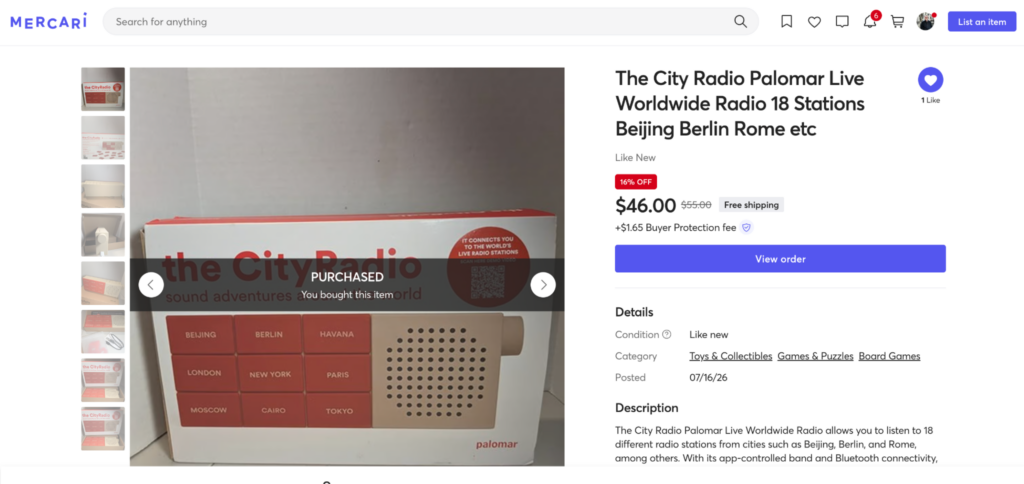
And now I have to come clean. In the process of writing this, I found a used CityRadio on Mercari and bought it.
New Partners
Sounds Profitable exists thanks to the continued support of our amazing partners. Monthly consulting, free tickets to our quarterly events, partner-only webinars, and access to our 1,800+ person slack channel are all benefits of partnering Sounds Profitable.
-
Veylan is the agentic infrastructure for modern marketing: a unified system for strategy, creative, media buying, and performance learning.
-
Nativ.ly treats podcast hosts as multi-platform creators. We help brands extend campaigns from audio to YouTube, social, and newsleter to leverage the full scale of their influence.
Want to learn more about partnership? Hit reply or send us an email!