Written by Jim Salveson, Director of Sport, Sport Social Podcast Network
For decades, live broadcast has been the gravitational centre of the sports media universe. Matchday television, appointment viewing and the shared cultural moment of live sport remain hugely powerful. But the way fans surround those moments has changed dramatically. In an era of fragmented attention, podcasts have quietly become one of the most important places where modern sports fandom lives.
This isn’t about replacing live sport. It’s about extending it. Emotionally, editorially and commercially. Sport audiences now demand content that reaches beyond the final whistle and that creates an opportunity for broadcasters both editorially and commercially.
How Sports Fans Consume Media Today
Modern sports fans operate across a complex media mix. There are variations dependent on varying demographics but, broadly the media mix consists of Live TV, social media, on demand and, increasingly, podcasts!
Live viewing dominates the event itself, social platforms create virality and podcasting sustains attention.
While TV and social are largely event-led with a primary focus on match content and coverage. Podcasts are relationship-led. They fit into fans’ daily routines (commutes, workouts, dog walks) moments where screens aren’t dominant and that allow full attention and engagement. According to Edison Research, podcast listening is one of the most “attention-rich” forms of media, with far lower multitasking than social or video.
In practice, this means fans may watch sport together, but they often process it alone, over time, with voices they trust.
The Unique Value Podcasting Adds
Podcasting is a unique medium that builds trust, engages audiences and provides a flexibility that many broadcasters don’t have via the usual broadcast mediums:
Trust: Podcasting is a one-to-one communication tool. Hosts speak directly into listeners’ ears, building familiarity and emotional connection over time. This is particularly powerful in sport, where fandom is deeply personal and identity driven.
Audiences make an active choice to consume podcasts in a way they don’t with other media. TV and social serve up content to a waiting audience, podcasting is a decision made to spend time with a host or show, instantly deepening the connection between medium and audience.
Edison Research’s Sports Audio Report highlights just how deep this connection runs:
“76% of sports podcast listeners continue to follow athletes even if they are traded to a new team, compared to just 51% of general sports fans.”
Podcasts don’t just reinforce team loyalty, they humanise athletes, narratives and personalities in ways other media struggle to replicate.
Engagement: TV and Social thrives on speed. Podcasts thrive on meaning.
Fans turn to podcasts not for the score, they already know it, but for tactical insight, emotional reflection, insider storytelling and niche focuses that they may struggle to find on other channels.
This is why podcasts perform so strongly after matches, during international breaks, transfer windows and off seasons. Those moments where traditional broadcast has less to offer.
Flexibility: Unlike broadcast schedules, podcasts are:
- On demand
- Easily segmented (daily, weekly, narrative, reactive)
- Scalable across platforms
- Niche focuses (don’t think BROAD-cast, think NARROW-cast)
This allows rights holders and broadcasters to respond editorially and swiftly to multiple audiences without the production overhead of television.
Why Broadcasters are adding Podcasts to their media stack.
Rather than competing with live coverage, podcasts increasingly complement it. They have become a way to extend reach beyond that of the live sporting event itself.
Edison Research shows that sports podcast listeners are among the most avid overall sports consumers, often watching more live sport than non-podcast listeners. They build additional audience rather than moving audiences to a supplementary channel. Podcasts deepen understanding, anticipation and emotional investment, which ultimately feeds back into viewing.
Netflix gets this.
Although not all sports specific, they have a history of launching shoulder content for key shows such as The Crown and Drive to Survive to deepen audience engagement and keep fans connected beyond the shows, they stream themselves.
As an organisation they clearly see podcasting as a key part of their 2026 strategy and, driven by the rise of podcast consumption via Connected TVs (CTV), have heavily invested to bring key exclusive shows to their streaming service. The recently signed deal (Oct 25) with Spotify will see several high-profile visualised shows from Spotify Studios and The Ringer via Netflix streaming platforms from early 26.
I have no doubt that there will be more original content to follow in the future. It’s a great way to keep audiences connected between releases/events, extend UP beyond the screen and build habitual engagement.
The likes of Sky Sports and ESPN also create podcasts that complement their live sports coverage yet, don’t present these alongside their TV coverage but the potential is there for companion pieces, post-match reaction, in depth stories or even alternative coverage to build upon existing coverage.
Commercial Opportunity
Even with the added audio value. FDs are going to be reluctant to sign off on resources if the returns aren’t there… Thankfully, podcasting also unlocks new commercial value.
Because listeners spend longer with podcasts, often 30–60 minutes per episode, sponsorship feels more like part of the story rather than an interruption.
Podcasts create the perfect context to sponsorship that may be already carried across other channels. With Host Reads that feel authentic, feature integrations that carry key messages, it’s editorial content that tells stories of WHY rather than WHAT.
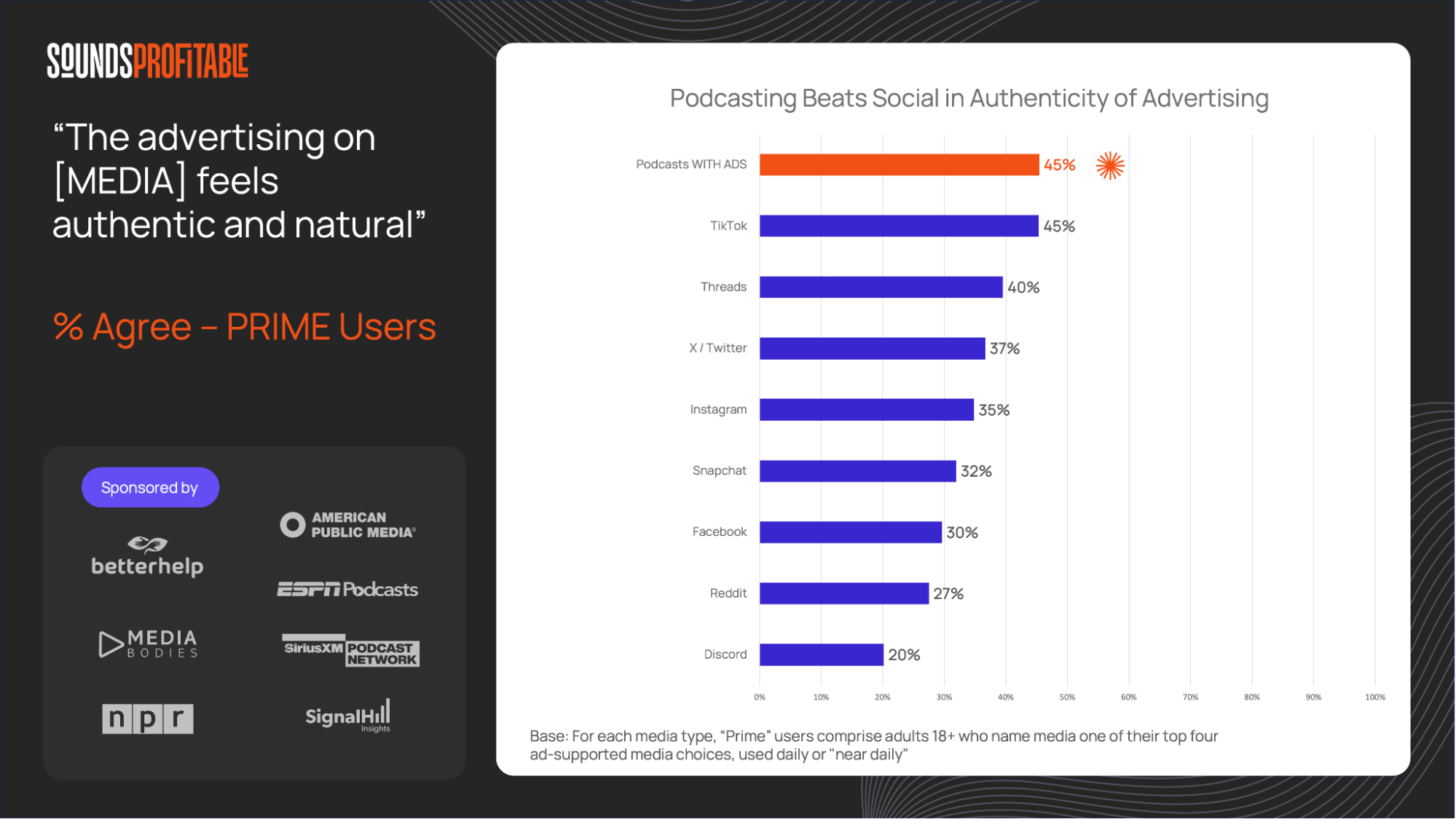
According to Edison Research, podcast ads are among the most trusted forms of advertising, with listeners far more likely to recall and act on messages delivered by hosts they follow regularly.
This allows rights holders and broadcasters to offer sponsors greater share of attention, a multi-platform offering and that all important deeper connection via the sponsors association with a sport and podcast the audience love.
Preparing for the World Cup.
The World Cup presents a huge opportunity to traditional broadcasters to super-charge podcasting strategies.
With smart connected TVs becoming the hub for streaming and on-demand content, they’re poised to be the primary gateway for World Cup viewing. This expands the content available to more than what is offered by the main broadcasters.
Simply put; if the traditional channels are not offering the content demanded by audiences they now have the potential to go elsewhere, without changing devices. The risk of potentially losing that audience engagement is matched by the opportunity to deepen it with the creation of additional shoulder content that can serve niche audiences and interests.
It’s easy to imagine broadcasters using official podcasts to:
- Follow teams or even specific players across the tournament.
- Offer deeper dives to narrative stories or tactical breakdowns.
- Reach younger, mobile-first audiences.
- Create native language content for international audiences.