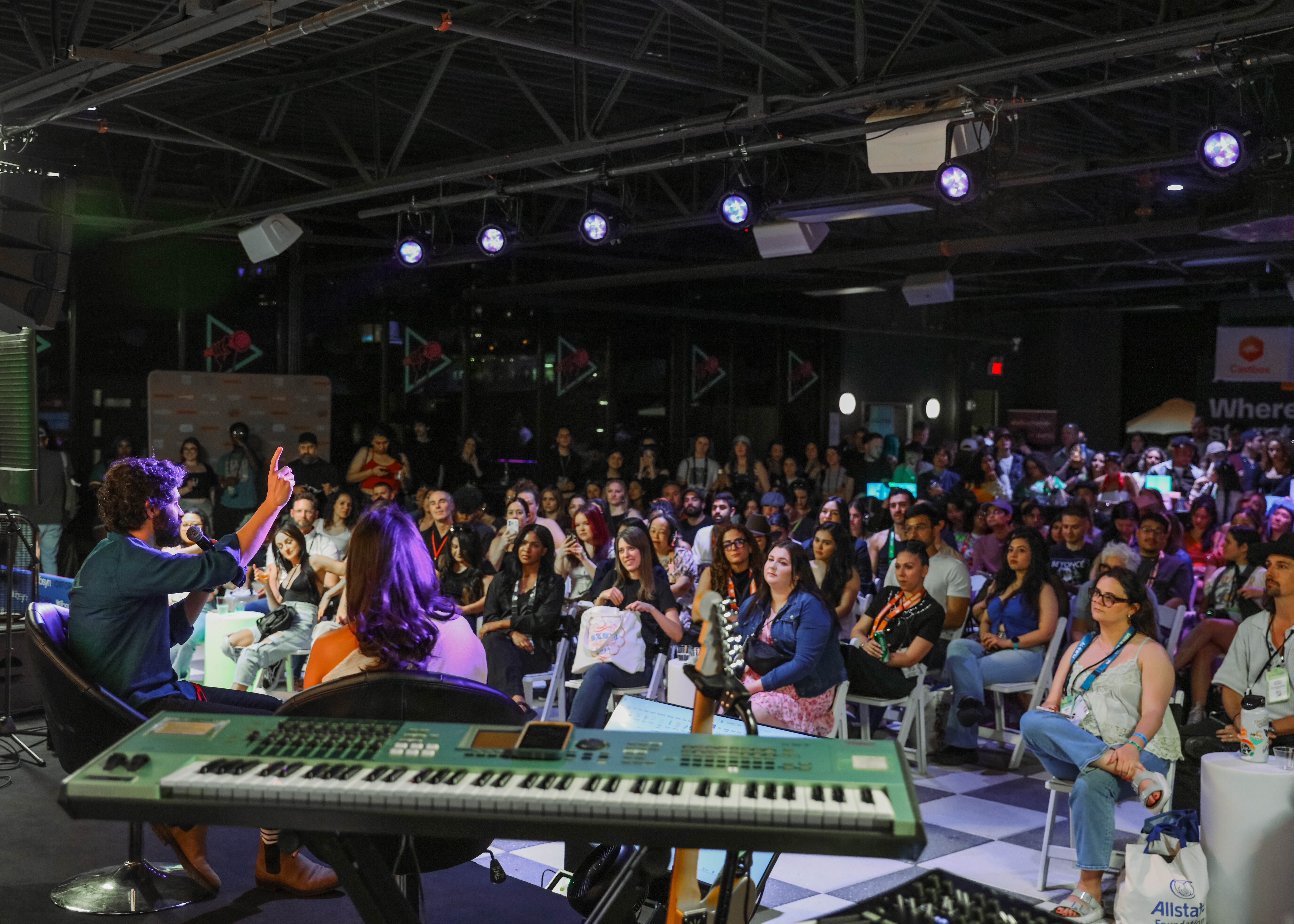
A conversation with Roger Nairn, Co-Founder JAR Podcast Solutions, about the launch of his podcast Dead Dads and what hosting a comedic show about death and grief opens up for him.
This is clearly a passion project born from a real moment. What’s it been like stepping from behind the scenes into the host chair, and how has that vulnerability shaped the show differently than if you’d handed it to someone else?
The reason we started Dead Dads is because we were looking for a creative outlet to deal with our grief. Being able to step into the host chair, selfishly, has allowed me the opportunity to work out my grief in real time.
When we’re interviewing the other men that happen to be in our show, of course, we’re trying to get the best conversation going and put as much value out into the world for our audience. However, it’s like talk therapy in a lot of ways. Plus, being the co-founder and CEO of JAR, I don’t get to do as much of the fun stuff as I used to. My job is to make sure there’s enough money in the bank, that we’re hiring the right people, and that our team is very aware and moving towards our vision, mission, and values.
So for me, this was an opportunity to create something of my own that gave me a creative outlet. If I were to hand this to somebody else, it wouldn’t be the same because it wouldn’t allow me to really work out my grief. It’s only been a year since I lost my dad, but I deal with it on a daily basis. I’ve always been someone who talks out my problems and talks out my challenges. This is a really good excuse to do it while also having some fun in the meantime, you know? We are not afraid to tell some dark jokes. We’re not afraid to have a laugh on the show because I think a lot of people, in my experience a lot of men in particular, work out their grief through humor. I think that’s cool.
The premise feels like it could unlock something really powerful in a one-on-one conversation with a listener. Are you hearing back from people who have heard it early, and what has that been like?
I’m hearing from our audience that they’re spending their alone time with the show and really digging into their own grief through listening to other men share their experiences. The podcast is not meant to be self-help. It’s meant as almost like a group conversation in a way where we are all working this out together. We don’t have a therapist on the show who’s telling you exactly what to do or how to feel. Instead, we’re just sharing other guys like the men out there who have lost their fathers and they’re sharing their experience.
A listener is going to take from it what they will. I think, being a one-on-one conversation, it’s a three-person conversation because my co-host Scott is on the show and he lost his dad three years ago. I think it’s that group mentality that communicates to other men out there that they’re not alone. They are going through grief with others and that we can all share our experiences and learn from one another.
I really want to create a community of men who have lost their fathers. Part of that is going to come in the form of resources and other ways that men can communicate with one another about their challenges, help each other. Again, the podcast is not meant as self-help or it’s not meant as a therapeutic session where we have therapists on the show. But I think there’s a lot of support we can get from just listening to other men and their experiences.
I think the biggest piece is that we’re showing men that they’re not alone and that it’s okay to talk about their grief. It’s okay to communicate that they’re struggling. It’s okay to laugh about the death of their father. It doesn’t mean you’re a bad person. I have a lot of guilt when I laugh about it, but at the same time, I feel better. I know that I don’t mean anything malicious by it. I think, yes, more guest stories. We want to include some celebrities on the show as well because I think that their stories have more reach.
Ultimately, our goal on the show is to help as many men as possible feel like they’re not alone in the death of their father and in their grief. We also want listener submissions. We have an answering machine on our website at deaddadspodcast.com where you can leave a message. Perhaps it’s a story about your dad or a funny story about your dad. Or if you want to leave a message to your dad.
It’s 1,2,3 years from the launch of this show. What are you hoping it accomplishes? For you, for your audience, for JAR?
We just want men to feel like there are others out there that have the same uncomfortable feelings they do, or maybe you’re laughing about the same things that they are, that they feel guilty about.
We want men to feel like they can go to other men with their problems, which I think is something that we all need to work on. And grief, especially, is one of those things that we tend to internalize. There’s a lot of power in sharing your experience with other men. I hope it just accomplishes a large audience of other men (and women, of course. Women are encouraged to listen to the show).
Personally, I want to just work out my grief more. I happen to be okay with doing it in a public space. I’ve always been that way. I’ve always felt like I have something to share. And in doing so, it helps others. I think my story is not any different than anybody else’s. I just happen to be sharing the death of my father and the grief that I’m facing with others, but with the goal of them feeling like they’re not alone.
What does this do for JAR? This is a personal project, to be clear. However, there are some things that we’re going to be trying the show and some sort of examples that I think can be passed over to the team at JAR. But they’re also teaching me a lot, to be honest. Again, being the leader of our team, I don’t get to do as much of the fun stuff as I used to. And so I think that being able to lean more into my creativity makes me a better leader. Hopefully something that rubs off on our team at JAR. Also, just from a cultural perspective, I always want to encourage our team to be as open and honest as they feel comfortable with being. And if it can help any members of my team to just be more open and vulnerable in anything in their lives that they’re willing to share, I think that brings us all closer together and makes for a happier, more mentally healthy team.