Five Things to Learn From Podcasting’s Super Spenders by Tom Webster
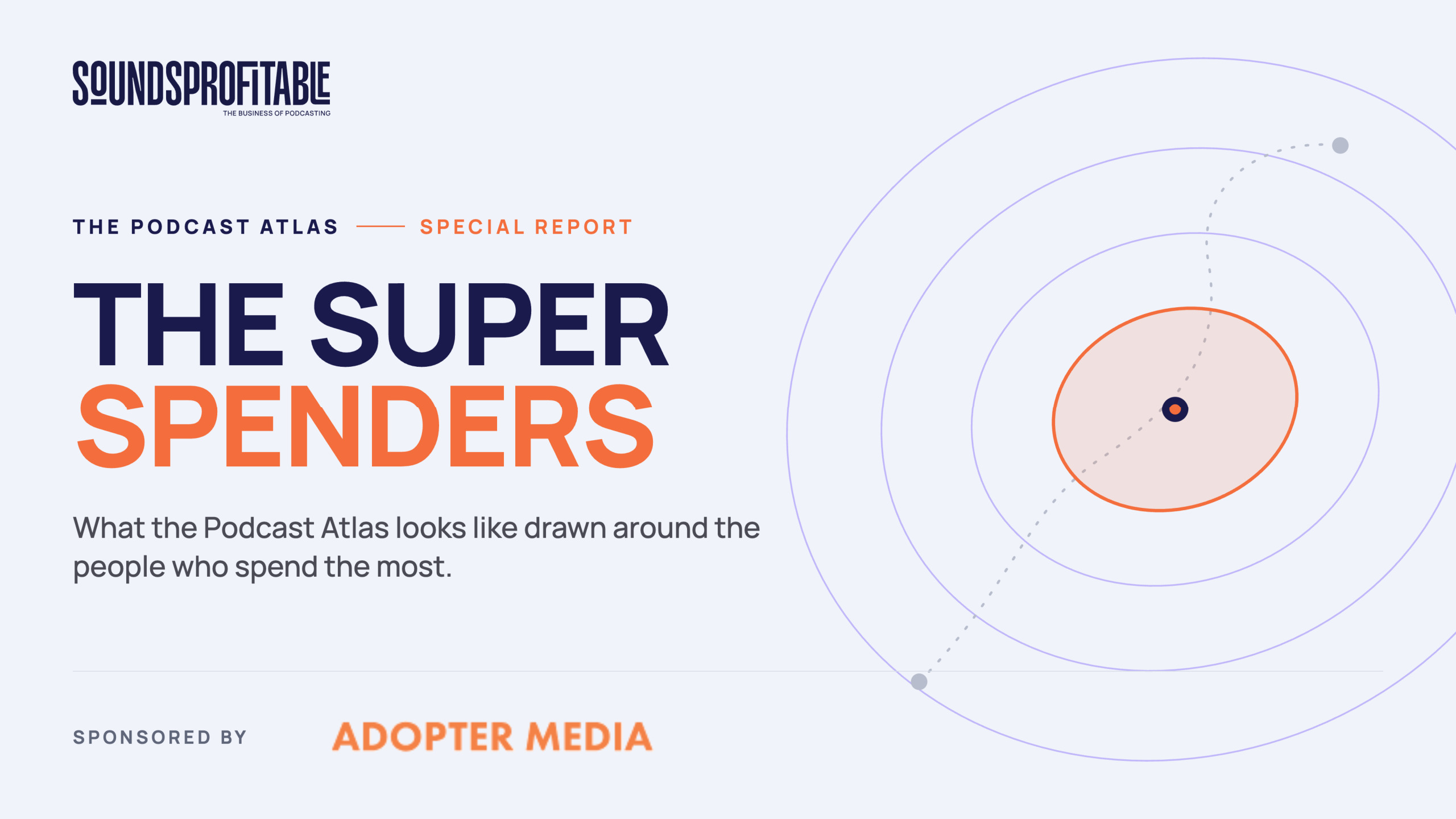
Tom Webster breaks down key findings from the new Sounds Profitable report on podcasting’s Super Spenders. This special edition of the Podcast Atlas, sponsored by ADOPTER Media, was covered in a recent webinar co-hosted by Webster and ADOPTER Media founder Glenn Rubenstein. In the last three months, 39% of podcast consumers made a purchase driven by a podcast ad. Super spenders are the 11% of podcast consumers who spent $300 or more. They account for roughly 62% of recalled podcast-driven spending. Webster says that figure is likely conservative. Super spenders use 6.9 platforms a month, against 6.1 for moderate spenders who spent under $300. They over-index in genres advertisers tend to underbuy, led by technology at 43% versus 26%. Webster cautions against reading the data as a simple call to buy tech podcasts. Instead, he argues advertisers should make smart bets, test, and add newsletters and social to the mix.
HLS Baked-in ads are now measurable by Shreya Paul
Podscribe and ART19, an Amazon company, launch an integration that measures baked-in ads in HLS-delivered episodes. HLS streams an episode as short segments rather than one downloadable file. Dynamically inserted ads on HLS fire standard pixels when they are served. Baked-in ads have no ad server call, so they have been hard to track. The integration covers shows hosted on ART19. It reports baked-in HLS ads in the same dashboards advertisers already use. Daylight Media is the first publisher live on the integration. Podscribe points to its Q3 2026 PPB report, where just 2% of the top 100 podcasts were HLS enabled. That compares with 85% of the top 100 on YouTube and 32% opted into Spotify Video. Podscribe says it is bringing more ART19 publishers onto the integration shortly.
“It’s All Additive”: Memberships Are the Newest Addition to Spotify’s Podcasting Toolbox
Spotify’s newsroom Substack talks with YMH Studios General Manager Alan Abdine about Memberships. YMH has 12 of its 35 shows offering memberships on day one. Abdine says early access and ad-free listening are the main perks at launch. He sees it as a fair trade for a stronger bond with superfans who help shows grow. Abdine recommended memberships to every show in the network. Some shows with large Patreon businesses chose to wait, worried about cannibalizing that existing audience. For comedy, he adds, memberships give shows more room for material that could upset advertisers.
Podcast buying got smarter, but creative is still lagging behind
AudioStack argues podcast buying has improved faster than podcast creative. Targeting is sharper, and programmatic and self-serve routes are opening inventory to new advertisers. Measurement is improving too. Yet most campaigns still send one 30-second spot to every listener of every show. The blog post argues that spot is often radio copy with a podcast logo on it. Host reads perform well, but they are expensive and hard to scale across hundreds of shows. The result is a few host reads on flagship shows and one generic spot for the long tail. AudioStack makes the case for its DynamicCreative product. Advertisers build one ad, choose which elements change, and generate dozens to thousands of versions in one batch. Each version is delivered through standard VAST tags into existing ad servers and DSPs. The company says this lets creative match the episode’s content without relying on listener data. Host reads stay where they fit, with dynamic creative covering the rest of the inventory.
The Walrus launches new Canadian podcast network
Canadian media outlet The Walrus will launch the Walrus Podcast Network in spring 2027. It will include a new flagship show from The Walrus plus a slate of selected independent Canadian podcasts, all hosted on Acast. Creators on the network will share revenue with The Walrus, with all profits being reinvested into fact-based journalism. The Walrus says it will sell custom ads to brands looking to reach Canadian listeners specifically, citing Signal Hill Insights research finding 46% of Canadian adults listen to podcasts on a monthly basis. Only 43% of that listening goes to Canadian-produced shows. The network aims to push that share past 50%. Creators looking to get involved can submit their shows by Monday, November 30.
…as for the rest of the news:
- Oxford Road’s October ORBIT ranking covers the top 15 news and politics podcasts by advertiser performance. Lovett or Leave It ranks first, and Crooked Media has four shows on the list. Over on Media Roundtable, Oxford Road’s Dan Granger and Giles Martin discuss rising ad loads and the “radioification” of podcasting.
- Spotify reaches 788 million monthly active users and 306 million subscribers in Q3. Bloomberg’s Ashley Carman reports revenue missed Wall Street predictions slightly. Spotify says podcast growth was led by sponsorships in its owned and licensed portfolio.
- On Podcast Advertising Playbook, Heather Osgood talks with Harvard Business School CMO Brian Kenny about the school’s seven podcasts. Kenny recommends guesting on podcasts over advertising or launching a show for most brands.
- New York Public Radio names Kimberly Watson Chief Development Officer. She will lead its development and membership teams.
- BBC Studios appoints Ozen.fm as its exclusive podcast ad sales representative in Brazil, Mexico, Chile, Colombia and Argentina.
- On Air Fest marks ten years with The On Air 100, a list of moments that shaped the event and the industry since 2017. Its 10th festival runs February 23 to 25, 2027, in Brooklyn.
- Acast Productions launches Places, Dahlingz!, a weekly comedy podcast hosted by Billy Porter, Leslie Jones and Phoebe Robinson. The first episode arrives November 5.
- Serial Productions and The New York Times launch METRO with Sarah Koenig, a biweekly show built with the Times’ Metro desk. The first two episodes are out today.