A confession: I listen to the Bill Simmons Podcast regularly, but I hate-listen to it. I used to love it when it was a mix of sports and pop-culture interviews, but over the last few years it has largely focused on the NBA and the NFL, which I love, and a whole lot of gambling, which… sorry, all those stats classes in business school seem to have stuck. Not a gambler. Hence, the hate-listen.
A couple of weeks ago I was listening to a new episode with former NBA coach Doc Rivers, a reliably great guest for Bill, and I just couldn’t get through it. The show was nigh-unlistenable. It felt more like an argument than a conversation, with both men talking over each other and interrupting each other at a maddening pace. Exhausting, and significantly more annoying than it should have been, even though it was largely devoid of gambling talk.
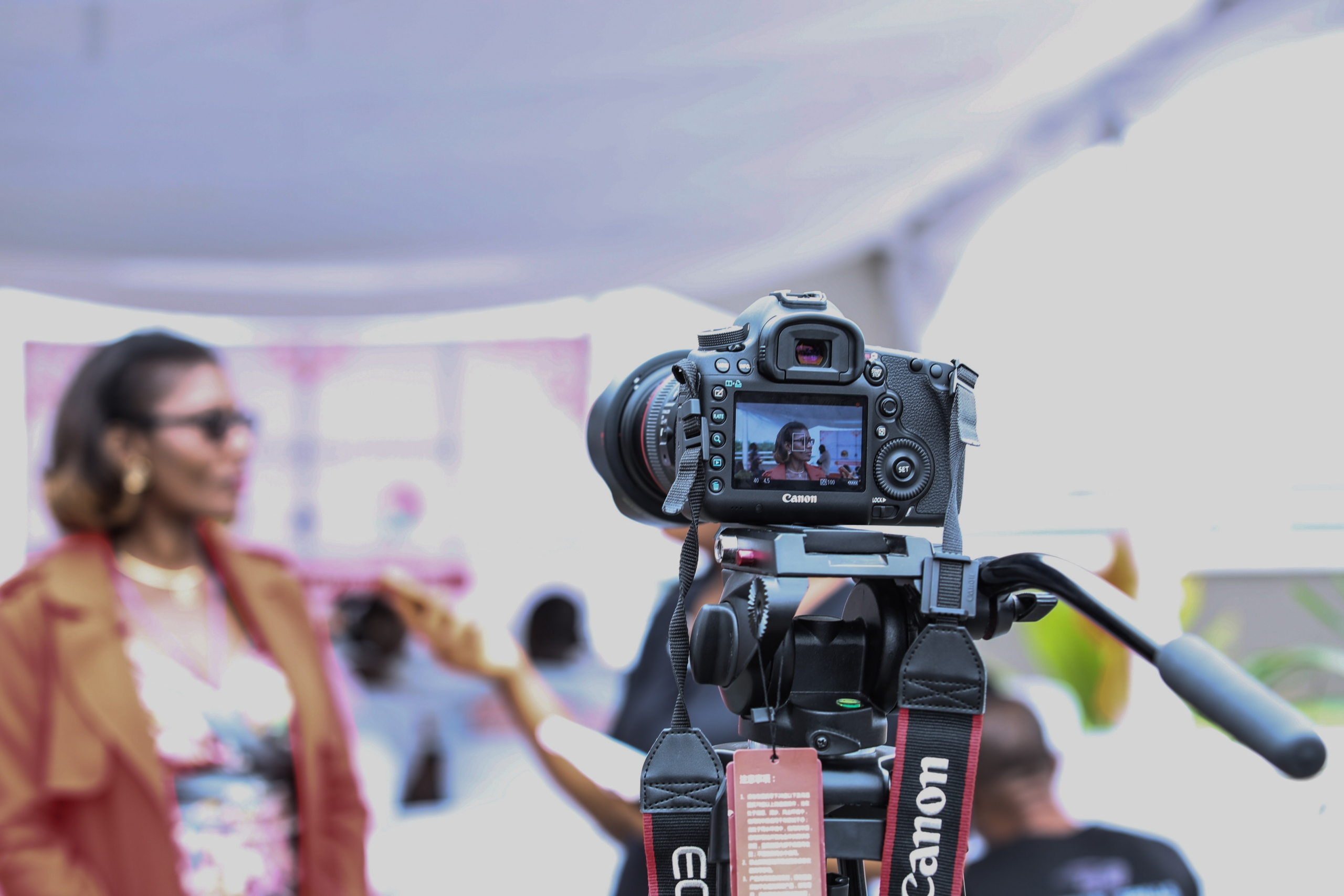
I had a gut reaction about why: The Bill Simmons Podcast went live on Netflix in January. Netflix means cameras and a set, and a set means performance: two guys talking faster and over each other to make good television, while the audio listener gets the leftovers. Video-first production harms audio, in other words, and Netflix-first harms podcasting, a conclusion I was already inclined toward after spending a previous newsletter worrying about what Netflix means for this medium.
But I am a researcher, and researchers aren’t allowed to complain without a table. So instead of writing you a letter about my feelings, I measured the show, running a bunch of audio analysis on it using my very powerful NVIDIA GPU, which I mention because I am told this makes me attractive to honeypot spies.
Doc Rivers is the ideal guest for this. He has been on with Bill repeatedly across the years, and Bill and Doc are the same two people whether or not Netflix is involved. I pulled five episodes from the last couple of years with a Doc segment, one from June 2024 and four from 2026. For each, I took only the Doc segment, removed the ads, and ran the audio through a speaker-separation model and a word-level transcript. Then I counted things: how many seconds per minute both men were talking at once, how often the next speaker started before the last one finished, how long each man typically held the floor, and how fast each one talked.
The November episode measured as badly as it sounded. In June of 2024, Bill and Doc overlapped for 1.4 seconds out of every minute. On November 5, it was 6.2 seconds per minute, more than 10% of the conversation!
So my ears were right about the symptom. Then I went looking for the cause, and I started with what I thought were the two most likely suspects.
Suspect one: the camera. There is a fair amount of literature on this, under the name “participant reactivity” or “camera reactivity,” which is the study of whether people behave differently when they know they are being recorded. A systematic review published this year by Herath and colleagues pooled nine of those studies and found that about 15% of participants reported changing their behavior because of a camera. By the authors’ own account, the underlying studies carried a high risk of bias and very substantial heterogeneity.
That is a real effect, but it is a small minority of people, self-reported, and nothing in it points toward faster talking or more interrupting. The older and more direct evidence cuts the other way. Abigail Sellen’s 1995 experiments compared conversations in the same room, over video systems, and over audio only, and found that adding a picture to a remote conversation did not change the number or distribution of turns. Something in Sellen’s data DID change the turns, though. I’ll get to that.
There is also the inconvenient fact that the show was already on video. The Ringer was putting Bill Simmons up on YouTube (and Spotify video, of course) years before the Netflix deal, and videoconferencing was the Ringer’s default way of recording its podcasts long before Netflix came calling. If a camera were the problem, I’d have heard the problem two years ago. So it’s too simplistic and, frankly, wrong to say that the presence of a camera degrades an audio conversation.
Suspect two: Netflix itself, something about the platform beyond the mere presence of video. This is why I pulled five Doc episodes and not just one before and one after. Four of the five are from the Netflix era, and if moving to Netflix changed how Bill and Doc talk to each other, it should show up in all four.
It doesn’t. Take two of those four, from April and from early June; one of them was a live Netflix show. On the measure that bothered me most, speaker overlap, they run well under the two most recent episodes: 2.9 and 2.2 seconds per minute, closer to the 1.4 in 2024 than the 6.2 in November. They are not quite as low as the other 2024 numbers (early handovers had already climbed from 16% to 29% and 34%), but they are nowhere near November. I guess Netflix has an alibi.
So, if I can’t blame video in general, and I can’t blame Netflix in particular, what can we point to? The answer, friends, is in the top row of this table. The two worst episodes are the two where Doc was in the room with Bill, and the three I could actually sit through are the three where he wasn’t.
|
Doc segment only, ads removed |
June 13, 2024 |
April 17, 2026 |
June 4, 2026 |
June 17, 2026 |
Nov. 5, 2026 |
|---|---|---|---|---|---|
|
Setting |
Remote |
Remote |
Remote |
Studio |
Studio |
|
Minutes analyzed |
67 |
78 |
50 |
111 |
85 |
|
Overlapping speech, seconds per minute |
1.4 |
2.9 |
2.2 |
4.5 |
6.2 |
|
Share of all speech that is overlapped |
2.4% |
5.2% |
3.8% |
8.2% |
11.0% |
|
Handovers where the next speaker starts early |
16% |
29% |
34% |
36% |
43% |
|
Doc’s median turn, seconds |
21.2 |
10.9 |
30.0 |
10.8 |
8.9 |
|
Bill’s median turn, seconds |
8.2 |
7.3 |
8.5 |
3.7 |
4.5 |
|
Words per minute, Bill / Doc |
209 / 178 |
211 / 183 |
210 / 184 |
215 / 192 |
226 / 193 |
The June pair is the cleanest comparison in the set: same guest, same season, same platform, thirteen days apart, and the only change I can point to is that Doc was in the studio for the second one. Overlap doubled and his typical turn fell by nearly two-thirds. Set November against June 2024 and the same thing shows up: back then, half of Doc’s turns ran longer than 21 seconds, which is a paragraph, and in November half ran under nine, which is a sentence or two. The words-per-minute row comes from a speech model run on stretches where only one man is talking, so treat it as directional; Bill’s November figure includes eight and a half minutes of him alone (see: Hate-Listening). Even so, Doc’s pace also accelerates in the studio.
None of this should have surprised me, because the research on rooms is better than the research on cameras. Julie Boland and her colleagues at the University of Michigan published a study in 2022 under the title “Zoom disrupts the rhythm of conversation.” They recorded the same pairs of friends talking in person and over Zoom. The average gap between one person stopping and the other starting was 135 milliseconds in the room and 487 milliseconds on Zoom, a lag large enough to break the rhythm that lets two people hand a conversation back and forth. Bill and Doc show the same signature: the median gap between one of them stopping and the other starting was 0.35 seconds in 2024 and zero in November. In a room, you can see a person wind up. On a Zoom tile you mostly can’t, and there is a small delay on top to boot.
And that is the thing in Sellen’s data I said I’d get to. Of her three conditions, the one that produced the most simultaneous speech was being in the room.
So the Bill Simmons Podcast of 2024 that I remembered as disciplined, with Doc finishing his paragraphs and Bill waiting his turn, was not necessarily intentionally disciplined. The lag was enforcing the discipline, and the later in-studio interviews took that lag away. Two people across a table who talk over each other are doing what people in rooms do.
Netflix still has a part in this, just a different one than I gave it. The platform didn’t change how Bill talks so much as where he sits, and I would bet a reasonable sum that part of the reason is that two people on a Zoom call is not particularly good television, as I am sure you remember from the COVID years. Nobody at Netflix needs to write a memo requiring in-person recording, and I found no evidence that anyone did. Any producer who has watched a Zoom interview on a 65-inch screen will arrive at the policy on their own.
The hosts of Higher Learning, another Ringer show, told the Los Angeles Times this spring that Spotify’s new Hollywood studio, built in part as a hub for the Ringer, has meant more in-person recording for them. That Netflix is the reason the Simmons show moved into a room is not a known directive. But if the move to a purely television platform drove the show fully into a studio, then maybe Netflix is an accessory to audio murder, if not the primary suspect.
I want to reiterate that this isn’t about video podcasting in general. I have five episodes of one show with one guest, which is enough to say these two episodes were measurably different and not enough to say anything about Bill with anyone else, or anyone else’s podcast. Not every row in that table behaves, either. April was remote and still ran twice the overlap of 2024, and Doc’s April median turn looks like a studio number, so something besides the room moved this year. Doc’s job is the obvious candidate: he isn’t coaching this season, Bill has said he’ll be on a lot more, and a semi-regular with nothing to protect is a different guest from a working coach doing a spot. And the measures above count crosstalk, which is a different thing from listenability. And the ultimate subjective judgment: “unlistenable” is a verdict from one set of ears that kept listening anyway because I am a masochist.
Still, for those shows making the same move out of the Zoom boxes and into a room with a set and some cameras, it would be prudent to listen to the finished episode with the picture off, in the car or on a walk, the way the audio part of your audience will hear it. If what you hear is two voices on top of each other, that is your hosts coordinating with their eyes while the listener has been cut out of the coordination.
The fixes are simple, really: a separate edit of the audio, and a host who understands that the pause the lag used to force on them was doing some work, and maybe a director in the room strong enough to slow Bill Simmons’ roll (Kubrick, maybe…wait, he’s dead). The show doesn’t have to go back to Zoom to get its audio back, as long as somebody in the room remembers that somebody else is only listening.
TL;DR: the surprising result of using videoconferencing for your video podcast: a better experience for the people who aren’t watching.
New Partners
Sounds Profitable exists thanks to the continued support of our amazing partners. Monthly consulting, free tickets to our quarterly events, partner-only webinars, and access to our 1,800+ person slack channel are all benefits of partnering Sounds Profitable.
- Signal Co. No1 develops, produces, and grows enduring media franchises.
Want to learn more about partnership? Hit reply or send us an email!