The Stars of Podcast Movement by Tom Webster
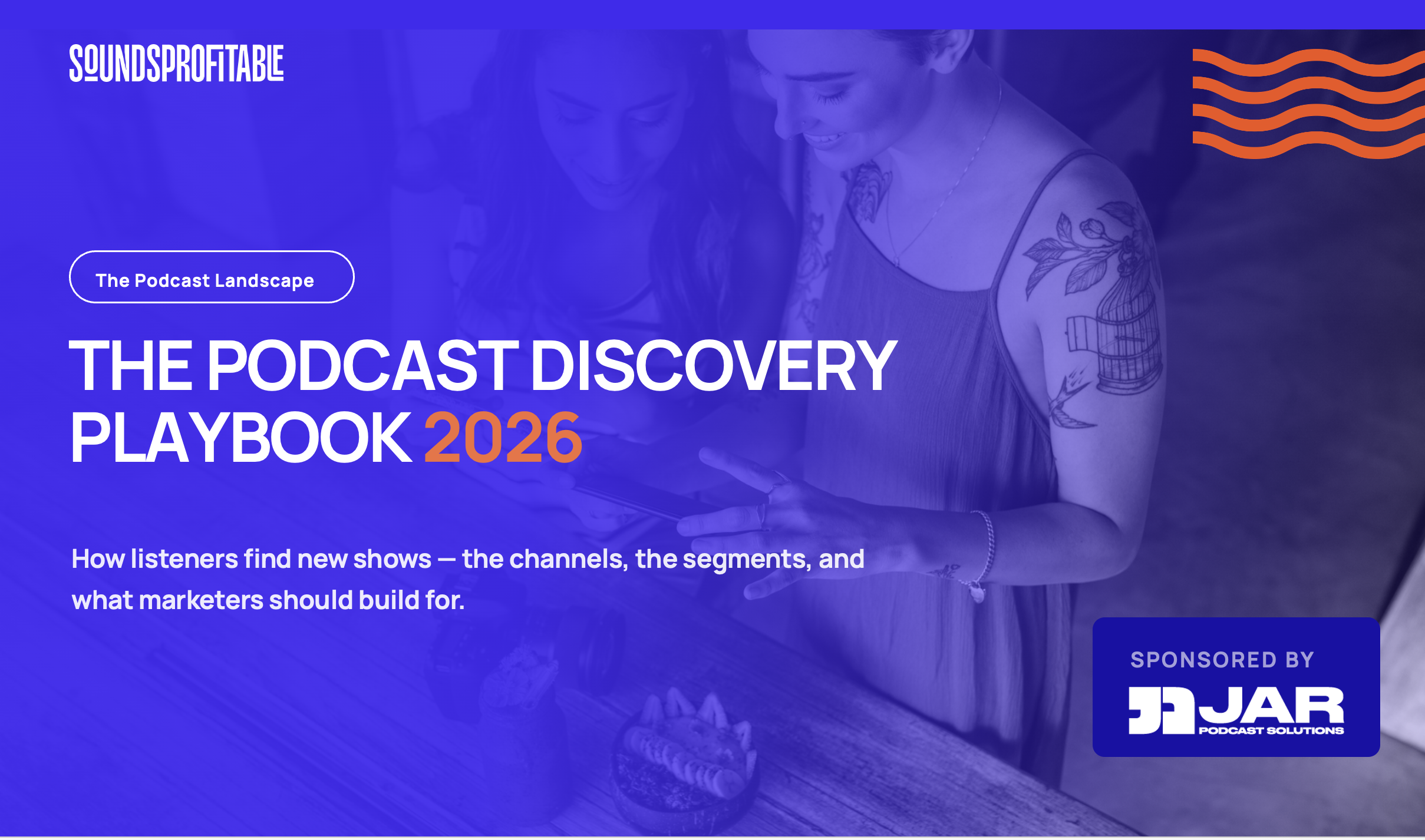
Podcast Movement returns to New York September 17-18 at Terminal 5, and Sounds Profitable’s Tom Webster runs through the keynote lineup worth planning around. Webster opens Thursday with The Podcast Landscape 2026, the fourth annual edition of the study, this year drawing on more than 5,400 consumers. He teases a genuinely surprising headline finding, that for the first time Apple has fallen out of the top three podcast platforms, displaced by an unexpected competitor, a shift he frames as a sea change in how the industry talks about what it does.
The rest of the stage leans toward creators and platforms. SiriusXM Media’s Greg Leader hosts MrBallen’s John Allen on turning fandom into a multi-platform brand across YouTube, podcasts, social, and live shows without losing audience trust. Arielle Nissenblatt and Lauren Passell bring their crowd-sourced session, WTF is a Podcast in 2026, built from attendee interviews on how people actually discover and consume shows. And YouTube’s Steve McLendon closes the keynotes with a look at new audio-first listening features and tools for turning long episodes into clips.
“YouTube just did us a huge favor”
YouTube’s recent change to how it counts views has thrown fresh confusion into podcast measurement, and Oxford Road CEO and Founder Dan Granger argues that might be exactly what the industry needed. By stirring the pot, YouTube is inadvertently proving why podcasting needs cross-platform measurement it can actually trust. Bumper co-founder Dan Misener ran the numbers and found the new metric counts nearly double what the old one did, meaning a show can appear to have roughly twice the plays overnight with no change in actual listening. The shared takeaway is simple: When a single platform can redefine a core metric on a whim, creators and advertisers are reminded how important consistent industry-wide standards can be.
Granger, speaking on his LinkedIn page, said the shift felt like “a kick in the pants” at first, but the resulting chaos makes the case for standardization better than any pitch deck could. Misener’s Bumper analysis puts hard numbers to the confusion. Because YouTube now counts a view the moment playback starts rather than after meaningful engagement, the same show can report close to double its previous view count with no change in actual audience. For advertisers trying to line a YouTube figure up against a downloads or streams number, the takeaway is that cross-platform comparisons only hold when everyone agrees on what is being counted.
Internet advertising records strongest growth in four years, reaching $19.8 billion in FY26
Australia’s internet advertising market grew 14% year over year to $19.8 billion in FY26, its strongest financial-year growth since FY22, according to IAB Australia. Audio climbed 6.6% to $353 million, and podcasting led the way inside that number, rising 10.1% and now accounting for 40% of all audio spend. Podcast advertising also set a fresh quarterly record of $40 million in the June 2026 quarter, up 13.1% on the year before. IAB Australia CEO Gai Le Roy credited much of the momentum to always-on rather than campaign-cycle spending, with small and medium businesses, retailers, and overseas advertisers all putting more money into the channel.
The growth comes with a caution from the same body. In its Future of Measurement review, IAB Australia argues the industry’s biggest gap is not a shortage of measurement methods but a lack of shared data standards. The report found strong confidence in measuring individual channels yet far weaker confidence in gauging their collective impact, with cross-media audience measurement flagged as the largest unresolved problem while channel-specific currencies still operate in silos. Its central recommendation is to adopt a common campaign-data taxonomy, potentially adapting IAB US’s Campaign Data Standards 1.0 rather than building something new, and to harmonize metrics and definitions across datasets. AI can speed that work, the review notes, but it cannot fix poor-quality data.
While they may not be top story material, the articles below from this week are definitely worth your time:
- Arielle Nissenblatt’s Trailer Park: The Podcast Trailer Podcast is launching a three-part miniseries built on Coleman Insights research into what makes a trailer work, drawing on a study in which 500 U.S. listeners reacted to four real trailers and authenticity outperformed slick production in three of the four tests.
- Netflix is adding podcasts from Katt Williams, Harlan Coben, and Stephanie Soo while renewing originals including Murder with My Husband and The Pete Davidson Show, a sign of deeper investment in audio alongside its video business, per The Hollywood Reporter.
- Earmax Media co-founder Andy Maxwell argues podcast advertisers should look past cheap reach and low CPMs, prioritizing conversions, brand affinity, and tightly engaged niche communities over raw scale, and advising brands to sponsor established shows rather than launch their own without a multi-year commitment.
- YouTube is teaming with Variety on an inaugural Creator Festival at the Toronto International Film Festival, where creators including Mark Vins, Ziwe, and Andrew Rea will debut exclusive video content on the platform, via Kaya & Jasmine.