Making It Easier for Video Podcasters to Earn on Spotify
With the first Golden Globes acknowledging podcasting set for this Sunday, Spotify has rolled out a few updates. Chief among them is new eligibility to join the Spotify Partner Program and monetize video podcasts similarly to monetizing YouTube videos. The threshold is now 1,000 engaged audience members, 2,000 hours consumed in the past 30 days, and three published episodes minimum. In addition, SPP members can now have the ability to add and remove dynamically-inserted host-read ad content from video episodes, allowing sponsorship changes over time instead of permanently baking them into the episode (along with delivery metrics that accompany most DAI ads). A new API is also coming in the near future that will allow video podcasters hosting on select platforms to directly publish and monetize episodes from their hosting platform (the initial partnered hosting providers are Acast, Audioboom, Libsyn, Omny, and Podigee). Spotify has also announced they recently crossed the threshold of contributing $10 billion USD to the podcast industry since 2019.
The Listening Experience Drives Podcast Performance
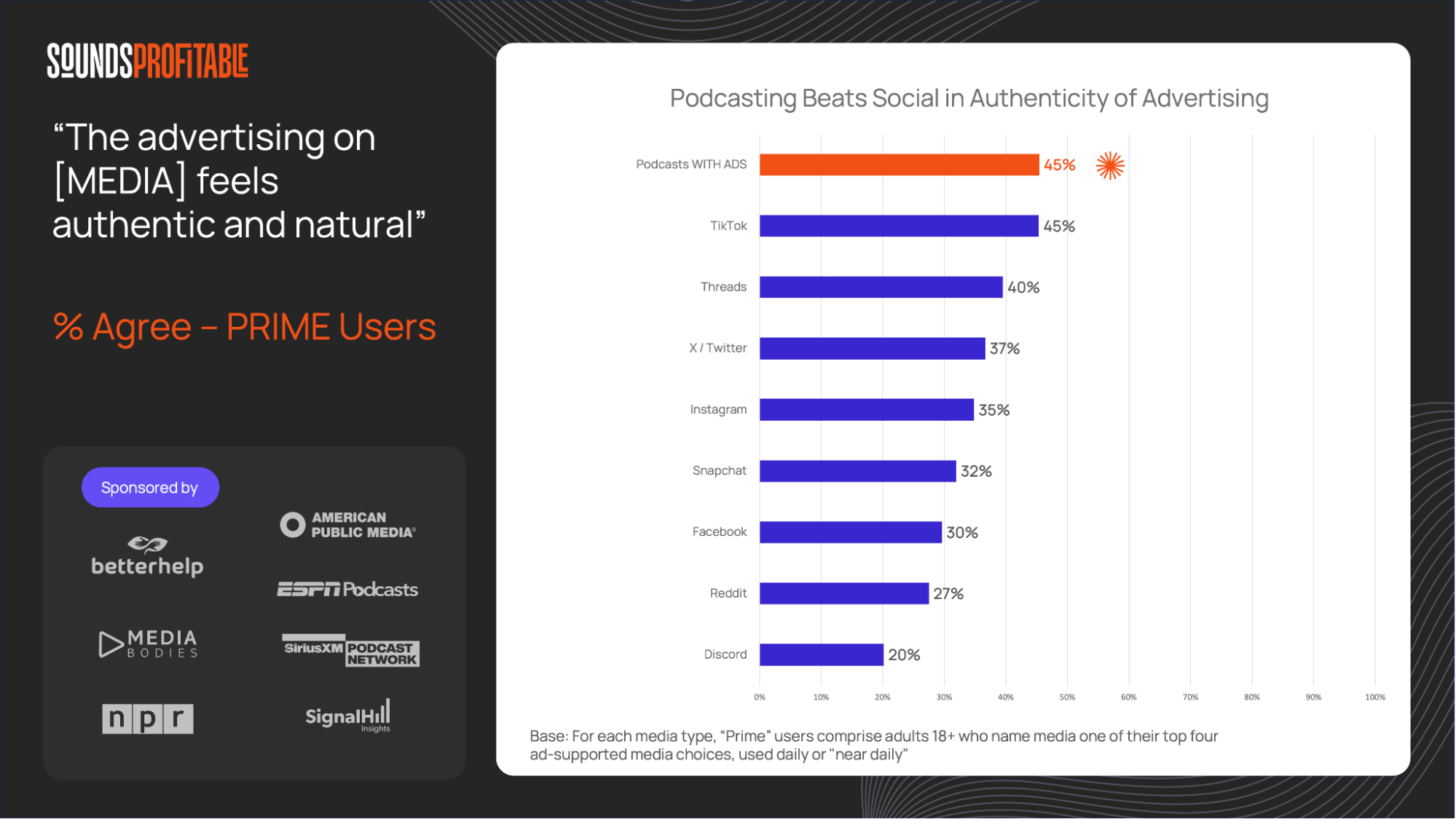
A new blog from ADOPTER Media that uses the recent PodcastAdBlock story as a jumping off point to discuss the fundamentals of why podcast advertising works. Trust is a core component of host-read podcast ads. They point to the existence of a fly-by-night operation like PodcastAdBlock as a symptom of a growing problem: as podcasting grows in size, some popular networks/shows have veered closer and closer to the amount of ad saturation found in terrestrial radio. Programmatic ad delivery accidentally inserting the same ad multiple times per episode, host-read ads that clearly were mass-produced independent of the content. The age-old adage about downloading music in the 00s applies to ads too: content piracy is a customer service problem. ADOPTER suggests more active enforcement of frequency capping, higher quality standards for ads (e.g. don’t reuse host-read segments multiple times, schedule ad markers with intentionality at conversational break points), and adopt a firm ceiling for how many ads-per-episode a show can have.
iHeart Ups Offerings
A couple stories have popped up in the iHeartMedia world recently. First up, with a real blast from the past: TiVo has announced they are rolling out an official iHeartRadio streaming app as an official content partner of TiVo OS. The OS is the official operating system used in connected TVs from brands like Sharp and Panasonic. Meanwhile, back in late December, iHeart announced that in 2026 the company is giving creators the ability to distribute full-length video podcasts directly into iHeartRadio’s ecosystem. As the move is part of their “creators first” mission, the iHeart release makes it clear podcasters submitting their video into the iHeart ecosystem retain full ownership and control over monetization. The feature also will not require podcasts to be hosted on iHeart-owned providers.
As for the rest of the news…
- The Podglomerate has announced an expansion of their podcast slate with an exclusive sales partnership for New Hampshire Public Radio’s full portfolio podcasts (Editor’s note: shoutout to Bear Brook).
- The Podcast Academy has announced their new Executive Director is Ami Thakkar.
- Podscribe has unveiled a new integration with independent identity graph Roqad, expanding Podscribe’s European measurement capabilities.
- Audion is expanding their presence across Europe, with special focus on Germany, Austria, and Switzerland with the appointment of Ina Börner to Head of Sales & Market Growth, DACH.
- The Canadian Broadcasting Corporation has announced a winter slate of original podcasts, with select productions available on YouTube.