Free webinar: Is your brand in the chatbot’s answer?
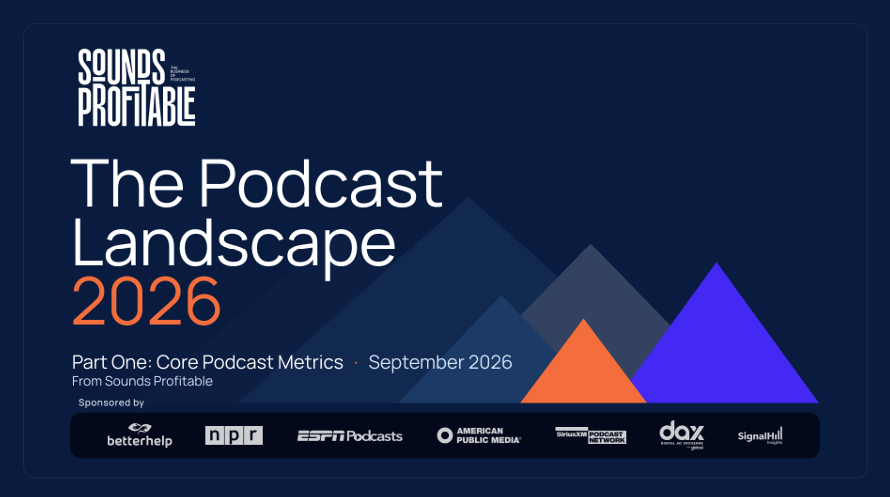
Right Side Up and Sounds Profitable are hosting a free webinar on October 28 at 1 p.m. ET (10 a.m. PT), The Chatbot Sent Them: What AI Use & Discovery Mean for Your Podcast Ad Dollars. Right Side Up Director Grant Durando will join Sounds Profitable Partner Tom Webster to build on findings from The Podcast Landscape 2026, the first baseline for how podcast consumers use LLMs and where they draw the line on AI in what they hear. Right Side Up’s pitch is that audiences are already asking AI what to buy, and the session is meant to turn the research into decisions for 2027 podcast budgets.
The agenda covers how AI may be adding a step between hearing an ad and buying, and what that extra step means for measuring podcast results. Durando and Webster will also look at how hosts can use AI in ad creative without torching listener trust, and whether a brand shows up when customers ask an LLM. Attendees are invited to bring questions.
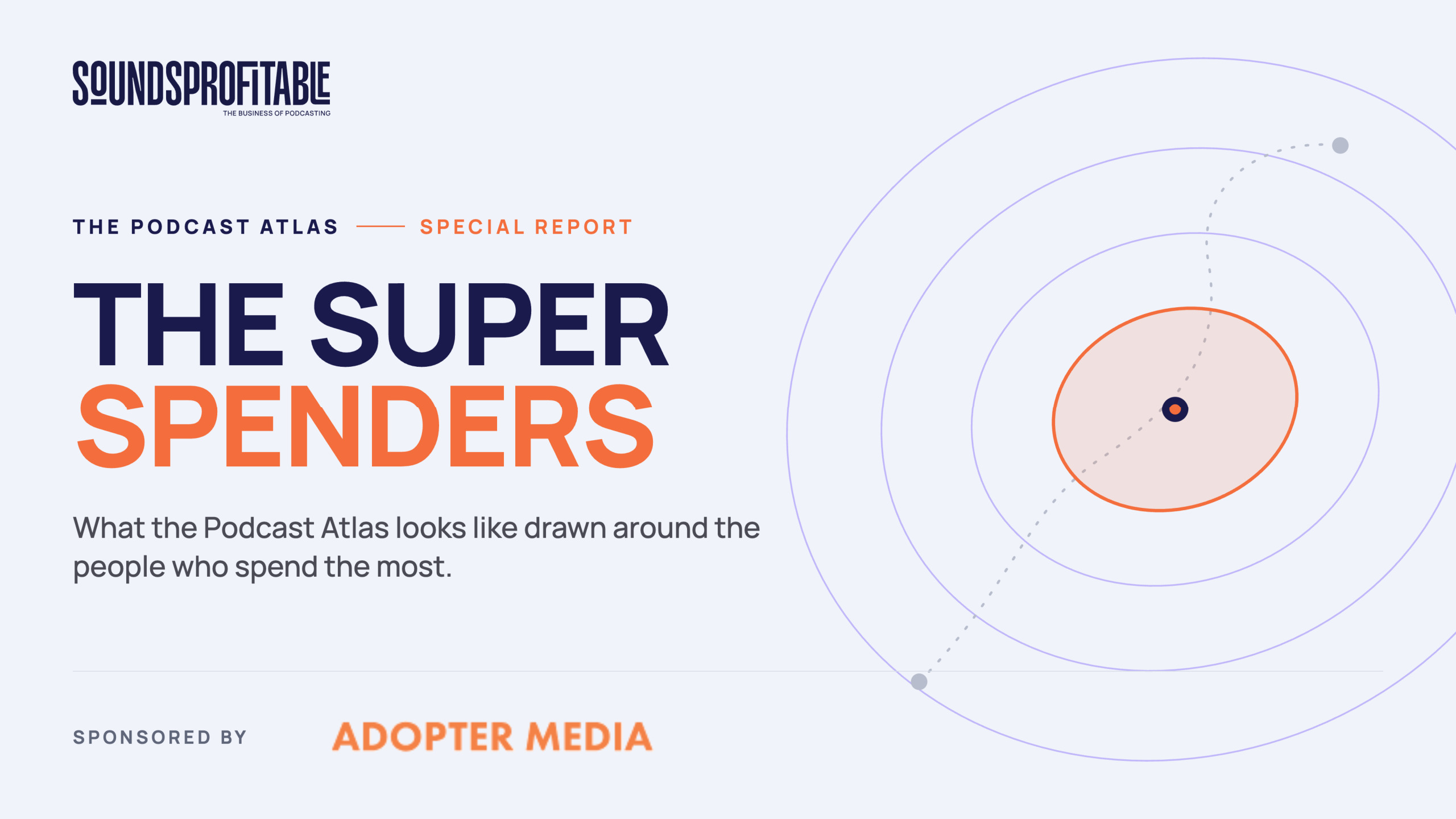
Five Things to Learn From Podcasting’s Super Spenders by Tom Webster
Tom Webster draws on the new Super Spenders report, a special edition of the Podcast Atlas sponsored by ADOPTER Media, to profile the consumers behind most recalled podcast ad spending. In the study, 39% of podcast consumers made a podcast-ad-driven purchase in the last three months, and 28% of those purchasers (11% of all podcast consumers) spent $300 or more. These super spenders account for roughly 62% of recalled podcast-driven spend, a figure Webster calls probably conservative because the $1,000-and-up bucket is valued at its $1,000 floor. The sample is U.S. adults who used at least one ad-supported creator or media platform in the past 30 days. Webster leaned on ADOPTER Media’s Glenn Rubenstein, whose remarks from the Super Spenders webinar are quoted throughout, and whose hunch that podcast audiences overlap with the households doing well in a K-shaped economy started the project.
The first three findings focus on breadth. Attention and completion do not explain the spending, but super spenders use 6.9 platforms a month against 6.1 for moderate spenders (those who spent under $300) and consumed 6.8 podcast genres in the last 30 days against about five for all podcast consumers. The gaps concentrate in technology, gaming, business and kids and family, with technology at 43% of super spenders against 26% of moderate spenders, while news and comedy show little difference. Super spenders run younger at a mean age of 39.4 and lean 60% male, and Rubenstein notes that many of those genres are notoriously under-monetized because advertisers misunderstand them and balk at higher CPMs. Audio and video reach are essentially equal across the two groups, so the footprint difference is social, led by TikTok, X/Twitter, Threads and Twitch, and super spenders credit purchases to ads heard in audio, seen in video and found in clips alike. Rubenstein cautions that X and Twitch count views in ways that make them hard to treat as a consumption audience, and that raw aggregate clip views can be very misleading.
The last two findings concern loyalty and response. Three-quarters of super spenders (75%) subscribe to at least one podcast newsletter against 38% of all podcast consumers, and among subscribers 54% say a newsletter often or always leads them to an episode, while 58% say clips often turn them into regulars of a show. They also recalled 2.5 advertised brands in the past week against 1.7 for all podcast consumers, and 44% often or always purchase after creator-platform ads, compared with 20% of moderate spenders. Host-read remains their most persuasive format but is less dominant, at 30% versus 42%, and they lead moderate spenders on financial services by 18 points, online mental health by 19, automotive by 18 and online medical services by 13. Webster closes with a caution that the data profiles who super spenders are right now and does not prove any behavior causes spending, so the action is to make smart bets, test, and add newsletters and social spend to widen exposure. The full report and the webinar replay are available here.
Introducing Memberships on Spotify
Spotify has unveiled Memberships, a way for creators to offer exclusive content and community perks to fans for a fee. Fans subscribe, check out and access that content on Spotify, and creators keep 90% of earnings while choosing how to package and price a membership, with multiple billing options and access tiers. Shows need more than 100 consumption hours, 100 listeners or viewers and three published episodes to be eligible, and setup runs through Spotify for Creators or Megaphone.
Spotify is also building in ways to grow the paying audience, including analytics on fan-to-member conversion, targeted email promotions and free trials for potential paying fans, and show page traffic that doubles as a promotion channel. Members get badges when they comment on episodes, creators can share welcome clips with new members, and Spotify says more community perks are coming. Creators can export member data, including email addresses, from members who choose to share it, so they can reach fans on or off Spotify.
In an interview on Spotify’s newsroom Substack, YMH Studios General Manager Alan Abdine explains why 12 of the network’s 35 comedy shows are offering memberships on day one. Early access and ad-free listening are the main perks at launch, which means Abdine cannot sell advertising against members, but he calls the trade a win because it deepens the bond with the superfans who help shows grow. He recommended memberships to every show, and some with large Patreon businesses chose to wait over concerns about cannibalizing that audience. Abdine says the offer is meant to be additive, since audiences do not move at scale and Spotify lets shows reach fans where they already listen. For comedy, he adds, memberships give hosts more room for material that could upset advertisers, and he points to Mystery Boys offering early access plus uncensored, unedited material.
We built a free tool to share YouTube engaged views by Jonas Woost
Bumper has released “Share Your Engaged Views,” a free tool for passing YouTube engaged view counts to advertisers. The need traces back to a change in how YouTube counts a view in late August. Before then a viewer had to watch for a certain number of seconds for a view to register, and now a single frame counts. Bumper’s analysis of hundreds of thousands of YouTube podcast episodes finds views for the average show have nearly doubled while the audience stayed the same, leaving buyers to wonder whether prices should double too.
At least some of the industry has settled on an answer. At the Sounds Profitable Business Summit in September, several podcast ad agencies agreed to buy on engaged views instead, which YouTube defines as clicking to watch or watching past the initial seconds. The catch is that only channel owners can see that number, in YouTube Studio, so advertisers lost the figure they used to find easily on public pages. Bumper says sharing screenshots and Google Sheets does not scale. Under its tool, a podcast’s owner gives Bumper access to the YouTube Analytics API with a few clicks, chooses who can see the engaged views, and Bumper shares them through a website or an API.
Podcast buying got smarter, but creative is still lagging behind
AudioStack argues that podcasting has spent the last few years fixing its buying problem, with more sophisticated episodic and contextual targeting, programmatic and self-serve routes opening inventory to new advertisers, and measurement finally showing what the medium does for real-world outcomes. The creative has not kept up. In most campaigns a single 30-second spot, often radio copy with a podcast logo on it, still goes to every listener of every show. Host reads are trusted and effective, the company says, but they are expensive, slow to produce and nearly impossible to scale, so the market has settled on a few host reads for flagship shows and one generic spot for everything else. That leaves the long tail, where contextual targeting is getting good, carrying creative that has nothing to do with where it plays.
AudioStack’s proposed answer is its DynamicCreative product, which builds one ad, defines the elements that should change, and generates anywhere from dozens to thousands of versions in a single batch. The result is delivered through standard VAST tags into existing ad servers and DSPs. It lists four benefits: creative matched to the show or episode context (its example is a Nike campaign opening on race season in a running podcast and on buying fewer, better things in a personal finance one), local and personalized swaps such as location, offer, language or weather without re-recording, faster and cheaper testing of hooks, voices and calls to action, and higher-value inventory for publishers. The company frames the idea as content context rather than customer chasing, since the show, episode, topic and mood are reliable signals the listener chose. It says the human stays in the loop on strategy and brand voice and that host reads should stay where they fit, with DynamicCreative meant for the rest of the inventory.
While they may not be top story material, the articles below from this week are definitely worth your time:
- Signal Awards winners include Good Hang with Amy Poehler, which took gold and the listener’s choice prize for Best Host, with other gold winners including All There Is with Anderson Cooper, Served with Andy Roddick, The Mel Robbins Podcast and Reclaiming with Monica Lewinsky. More than 94,000 unique voters cast 260,000 votes for the listener’s choice prizes, and honors will be presented at the Signal Awards Winners Party on November 9 in Brooklyn.
- IAB Tech Lab’s Podcast Technical Measurement Guidelines v2.3 are now final, clarifying how server-side measurement rules apply to both audio and video podcasts, and CoHost is the first podcast hosting company certified under v2.3 after earning recertification on October 15.
- The Golden Globes have named the 30 podcasts eligible for Best Podcast at the 84th ceremony, 19 of them returning from 2025 and 11 new, with eligible shows required to submit by October 30. Nominations come out December 7 and the ceremony airs January 10 on CBS and Paramount+.