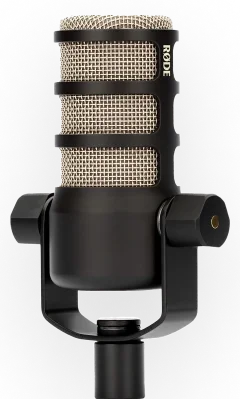
You call up your favorite podcast on YouTube, put on your walking shoes, and head out for an hour. Somewhere around the thirty-minute mark you go to pause it and notice the tab you opened is YouTube. Not the podcast app. Not Spotify. YouTube. Full video, full production, two people in chairs with good microphones. You haven’t looked at the screen once. You just spent an hour on YouTube. You didn’t watch a thing.
The gap between what a platform records and what a listener is actually doing is most of what I want to talk about today.
For our latest study, we carved out a segment we’re calling Audio Primes: podcast consumers who listen to 75% or more of their podcasts as audio. They’re about 22% of podcast consumers. The Audio Primes report was sponsored by RSS.com, and is derived from The Podcast Landscape 2025, conducted with our research partner Signal Hill Insights and sponsored by American Public Media, BetterHelp, ESPN Podcasts, SiriusXM Podcast Network, and NPR. And when we started looking at who these people actually are, most of what I assumed about them turned out to be wrong.
Start with age. Everyone — me included — pictures the audio-first listener as a little older, a little less plugged in. A sedan commuter, stubbornly loyal to a podcast app, a holdout from before video took over. In the data, the 55+ cohort under-indexes among Audio Primes by nine points. The 35-to-54 cohort over-indexes by six. Audio Primes skew younger than the total audience, not older.
The video data is where the picture really flips. Ninety percent of Audio Primes use YouTube — eleven points above the total podcast audience. They over-index on free streaming TV, Instagram Reels, and premium streaming with ads. These are not people who avoid screens. They’re in more screens, more often, than the average podcast listener. And then, for podcasts, they choose to close their eyes and listen.
“Holdouts” is the word that keeps getting used. It’s the wrong one. They’re not holding out from anything. They’re choosing.
And here’s the part that matters for anyone buying media: YouTube is the number one podcast platform for Audio Primes at 41%, almost identical to the total audience. The platforms look the same. The behavior is completely different. When an Audio Prime opens YouTube for a podcast, they’re listening. The screen might be off, or in another tab, or face-down on a desk. The platform is video. The consumption is audio.
A real chunk of what we count as “video podcast consumption” on YouTube is audio consumption happening on video infrastructure. We’ve been looking at the platform and assuming we know the behavior. The data says we’re wrong more often than we think.
Not Who You’d Expect
Krystina Rubino founded Right Side Up. She reads podcast advertising data for a living. When she read through our report, her reaction on LinkedIn was flat and immediate: “These aren’t holdouts from a pre-video era.”
She’s right. Audio Primes are more educated than the total podcast audience — 39% hold a bachelor’s degree or higher, four points above average. They earn more: 9% make over $200,000 a year, three points above the base. And 37% have kids under 18.
That last one matters. When your hands are making lunches and your eyes are watching a kid, your ears are the only thing available. For Audio Primes, audio isn’t nostalgia. It’s an extra set of hands.
They gravitate toward genres that reward sustained focus — political talk, self-improvement, business, science — and under-index on video gaming and celebrity interviews. They over-index on Reddit and LinkedIn by ten points each: platforms that reward depth over scrolling. Everything about this audience says deliberate.
If the person whose job is buying this audience didn’t have the right mental model of them, it’s fair to ask who did.
The Word-of-Mouth Engine
Seventy-seven percent of Audio Primes listen at least weekly — eighteen points above the total audience. Forty-eight percent follow just one or two shows. Twenty-two percent have literally never stopped listening to a podcast they started. Seventy-two percent use the same platform every single time. This is an audience built on routine.
But loyalty doesn’t mean they’ve stopped looking. Thirty-two percent started a new podcast in the last month, eight points above average. They keep a short rotation — and they’re always auditioning for the next slot.
Then the real multiplier: 71% of Audio Primes are likely to recommend a podcast to someone else, eleven points above the total base. They give and receive recommendations at higher rates, and their friends, family, and coworkers listen at rates eight to twelve points above average. This is podcasting’s word-of-mouth engine. Reach one Audio Prime, and you’ve reached their network.
One more finding for every ad sales team reading this: Audio Primes are more sensitive to irrelevant ads but less sensitive to ad volume. They don’t mind hearing ads. They mind hearing the wrong ones. That’s a fundamentally different conversation from the one most of us are having about ad load.
What I’d Be Wrong About
It would be easy to read this piece and walk away thinking the lesson is “don’t bother with video.” That’s not what I’m saying, and I’d be making a different mistake if I let you read it that way.
Audio Primes watch more video than the average podcast listener — a lot of them are finding their audio-first shows through video. Clips on Reels, thumbnails on YouTube, an interview somebody else watched and told them about. Video is still doing the discovery work. What the data actually says is narrower and more useful: once an Audio Prime has decided to spend an hour with a show, the screen stops being the point. The platform is video. The consumption is audio. Both are true at the same time, and a strategy that ignores either one will miss this audience entirely.
Audio Primes are younger, more educated, higher-earning, heavier consumers of every form of media, more loyal, more likely to recommend, and more actively discovering new shows than the average podcast listener. And they listen.
Not because they’re behind the curve. Not because they haven’t discovered video. They listen because they’ve tried everything else and they know what audio does for them. They listen in the car and at the gym and while making lunches. They listen on YouTube with the screen off.
When you look down at your phone after that hour and see the YouTube logo, you might think for a second you did it wrong. You didn’t. There are 22% of us who do it exactly like that. The screen is just a door. The listening is what’s behind it.