Ask a Marketer: How Advertisers Read the Research
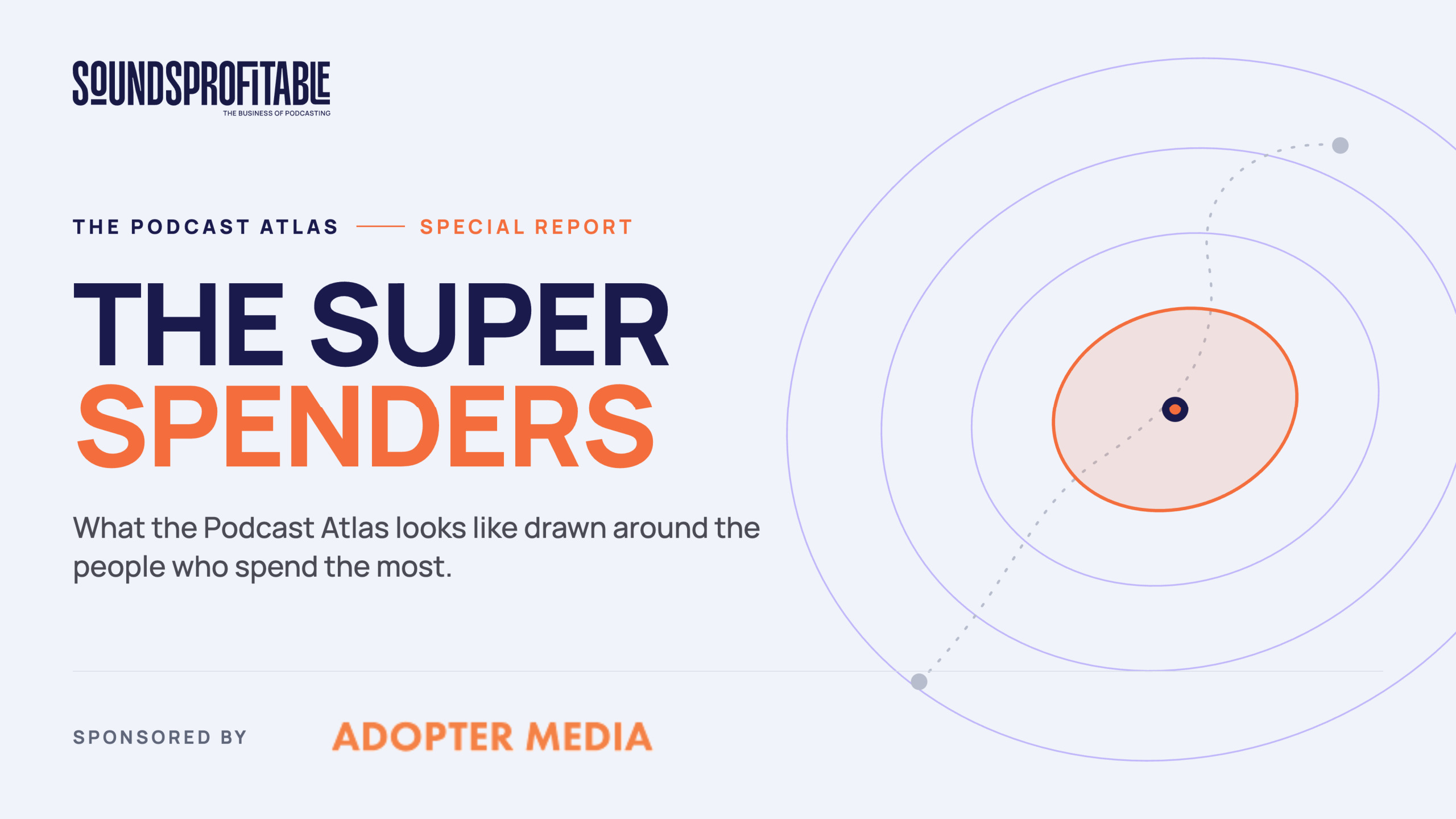
Sounds Profitable’s next Ask a Marketer webinar puts fresh research in front of the people who buy the media. On Tuesday, August 18 at 1:00 pm ET, Right Side Up’s Krystina Rubino and Quo’s Tori Murray will join Tom Webster to work through The Podcast Atlas. Built from a survey of 5,061 U.S. consumers, the Atlas focuses on how creator-based advertising performs across audio, video, social, and newsletters. From the buyer’s chair, the two will sort which findings actually move a media plan, which are merely interesting, and how to make the case for podcast spend to people who do not follow podcasting. Grab your virtual seat now!
Five Days at Terminal 5 by Tom Webster
Podcast Movement isn’t just renting out a convention center this year, it is taking over Terminal 5 in New York City for five straight days, and Tom Webster used this week’s essay to walk through the whole run of show. It opens with the inaugural, partner-only Sounds Profitable Business Summit on September 14 and 15, and the first speakers announced set the tone: Ira Glass, Don Lemon, and Rich Roll share the bill with Marketplace’s Kimberly Adams, FlightStory’s Maggie Sellers Reum, and executives from YouTube, Amazon, and Scalable. More than 125 brand, agency, and advertiser representatives have already registered, and the two days open with a Central Park run club before a single session begins, while Crooked Media is holding a major exclusive announcement for the stage.
The pitch, as Sounds Profitable Partner and Podcast Movement President Bryan Barletta frames it, is a room engineered for substance over spectacle. The Summit promises “content that’s practical instead of hypothetical, speakers who are doing the work instead of talking about it, and conversations that attendees can take back to their businesses the very next day,” built around original research, hands-on workshops, and long networking windows rather than sponsored speaking slots.
From there the week continues through the IAB Podcast Upfront and its after party before Podcast Movement’s newly revealed lineup closes things out on September 17 and 18 in Terminal 5. The creator-facing conference spreads more than 80 sessions across five stages, with Acast’s Greg Glenday, NPR and Planet Money’s Alex Goldmark, Barometer’s Tamara Zubatiy, beehiiv’s Ainsley Rossitto, Amplifi Media’s Steven Goldstein, and Podnews’ James Cridland among the names. “Every change we’ve made this year was intentional,” Barletta said of the redesign, describing an event rebuilt so “creators, publishers, brands, agencies, and technology leaders are spending time with the people they actually need to meet.”
Official Podcasts: The Natural Home of Betting Sponsors in 2026/27 by Ryan Barker
With the Premier League phasing out front-of-shirt betting sponsorships starting in the 2026/27 season, Sport Social’s Ryan Barker argues the gambling money will not disappear, it will move to a better-fitting home in the official club podcast. Where a shirt deal is built for raw visibility, Barker writes, podcasts deliver a “deep level of engagement” alongside real reach, syndicated across audio, video, and social from a single show.
His case rests on what official podcasts uniquely offer a sportsbook: trusted club voices, access to exclusive content and talent, and room for the kind of storytelling a logo on a jersey can never carry. Those ingredients, Barker contends, let betting brands communicate their values and responsible-gambling messaging while still driving measurable business results, which is why he calls official podcasts “one of sport’s most valuable advertising environments” in the post-sponsorship era.
Your podcast’s problem was never the budget by Fatima Zaidi
Quill and CoHost CEO Fatima Zaidi has a blunt diagnosis for the brand podcasts that quietly fold: the problem was never money, it was the inability to answer one question. Teams pour resources into production and still cannot say, in a sentence, what the show is actually for, and that vagueness is what gets a program cut the moment budgets tighten.
“What is this show for?” is the question Zaidi says most branded teams cannot answer, and she is pointed about why. “Awareness” and “thought leadership,” she argues, are not goals at all but ambitions vague enough that they “survive because they can’t fail,” setting no target, excluding no critics, and promising nothing anyone can measure.
Her fix is a three-part test the strongest branded shows already pass: a named audience of specific people or accounts chosen on purpose, a defined change the show is meant to create in how those people think or act, and a single owner accountable for that outcome. Clarity, not cash, is what separates the podcasts that last from the ones that get value-engineered away in the next planning cycle.
Nielsen to Acquire DoubleVerify in $2.15 Billion Deal by Gene McKay
Nielsen agreed to acquire media-verification company DoubleVerify in a $2.15 billion all-cash deal, paying $13.60 a share for a roughly 30% premium over DoubleVerify’s 60-day average price. DoubleVerify handles viewability, brand safety, invalid-traffic detection, and media-quality verification, and it will keep operating under its own brand as a privately held Nielsen subsidiary once the deal closes, which the companies expect in the first quarter of 2027 pending shareholder and regulatory approval.
“Joining forces with DoubleVerify will extend our capabilities deeper into the digital media industry,” said Nielsen CEO Karthik Rao. The combined company reaches across television, streaming, digital, social, mobile, audio, and AI-driven ad platforms, with more than $4 billion in annual revenue and clients responsible for over $300 billion in ad spend.
For podcasting, the detail that matters is the explicit inclusion of audio in that verification stack. Advertiser confidence in measurement and delivery has been one of the medium’s most stubborn pain points, and pairing Nielsen’s audience data with DoubleVerify’s verification tooling puts a larger, better-resourced player to work on exactly the transparency questions efforts like the AMP Accords are trying to answer.
Quick Hits
While they may not be top story material, the articles below from this week are definitely worth your time:
-
Sounds Profitable is proud to sponsor the 2026 International Women’s Podcast Awards hosted by Tink Media. Entries close August 14 with a $50 submission fee and scholarship options available, and Sounds Profitable partners can submit for free, so hit reply or check the official Slack server for details.
-
The Podglomerate has four sessions in the running for SXSW 2027 and is asking for PanelPicker votes to help bring them to Austin, with public voting open now.
-
Acast acquired Backyard Ventures for $20 million, adding more than 200 premium creators across podcasts, YouTube, newsletters, and social to fold video expertise and direct advertiser relationships into its omnichannel monetization pitch.
-
A Bumper blog post explains why your Apple Podcasts play count looks so high: Apple counts every press of play rather than unique listeners, so the figure should not be compared directly to Spotify or YouTube, a mismatch the AMP Accords are pushing platforms to reconcile.
-
Spotify is asking artists to disclose when their music is AI-generated, part of a broader push to label synthetic content that signals where creator-economy platforms are heading on AI transparency.