The Podcast Atlas, the study we released just yesterday, is at its heart a study about advertising effectiveness: where it works across the creator ecosystem, and what an advertiser is actually buying when they buy into any one piece of it. The map has five territories, and audio podcasting’s role in that system is a specific one. It builds the trust the advertising runs on, and it does it in moments no other format can reach. Here are five things the data says about why audio works as an ad environment, starting with what I think is the most unignorable fact about audio podcasting.
1. Audio goes where screens can’t
This is the finding that to me best answers the question, “Why audio?” We asked people who consume both audio and video podcasts what they’re doing while they listen and while they watch, so the comparison is the same person reporting on both formats rather than two different crowds. Audio wins every hands-busy, on-the-go moment in the day, and it isn’t close.
|
While they’re… |
Audio |
Video |
Audio’s edge |
|---|---|---|---|
|
Exercising or walking |
46 |
22 |
+24 |
|
Doing housework or chores |
46 |
25 |
+21 |
|
Commuting or traveling |
38 |
20 |
+18 |
|
Cooking |
41 |
27 |
+14 |
Add it up and 78% of these dual consumers reach for audio during at least one hands-busy moment, against 55% for video. Video earns its keep in the lean-back moments, where it should, leading when people are relaxing with dedicated attention (50 to audio’s 39) or eating and drinking (42 to 38), so each format ends up owning a different part of the day. The difference that matters for an advertiser is that only one of these formats travels, which means a video-only buy goes quiet the moment someone laces up their shoes or pulls out of the driveway, and audio is the only way back into those hours.
2. …And they’re paying attention while they do it
The easy assumption about hands-busy listening is that it must be half-listening, something playing in the next room while attention is elsewhere, but the data points the other way: among audio listeners, 77% give a podcast their full or nearly full attention. The hands are busy, but the ears, and the attention behind them, are not. These are long, low-distraction stretches where one creator’s voice is the only thing in the room, which is exactly the condition under which an ad actually gets heard rather than scrolled past.
3. Audio leads on credibility
The Atlas asked each platform’s most engaged users, the people we call Primes, to rate the content they spend the most time with. Audio’s own listeners rate it more accurate and factual than the users of any other platform rate theirs: 58%, ahead of video at 55% and well ahead of Facebook at 36%. When people had a bad experience with ads, audio came in at the low end too, 21%, tied with video and YouTube for the best score in the study. For a brand deciding where its message will be believed, audio is the environment people trust most, by their own account.

4. Audio listeners give the benefit of the doubt
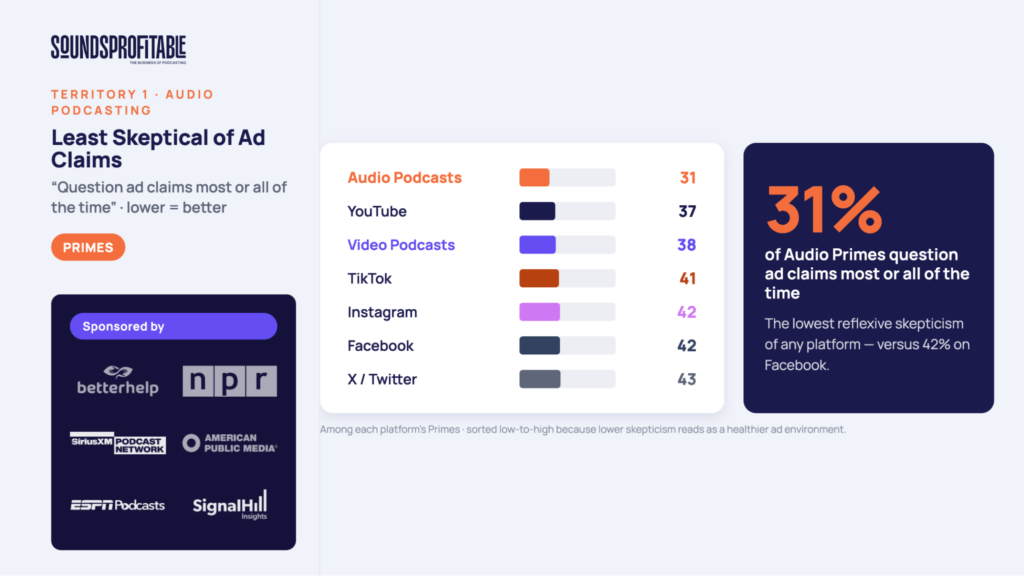
Trust shows up in how people receive an ad. Only 31% of Audio Primes say they question ad claims most or all of the time, the lowest reflexive skepticism of any platform, against 42% on Facebook. They extend that same generosity to the creators, with 27% of Audio Primes believing audio podcasters are mostly or entirely motivated by helping their audience rather than by money, the highest read of any platform and well above Facebook’s 17%. An audience that walks into the ad assuming good faith is a rare thing to hand an advertiser, and it’s the difference between a message that gets a hearing and one that gets braced against.
5. They finish what they start
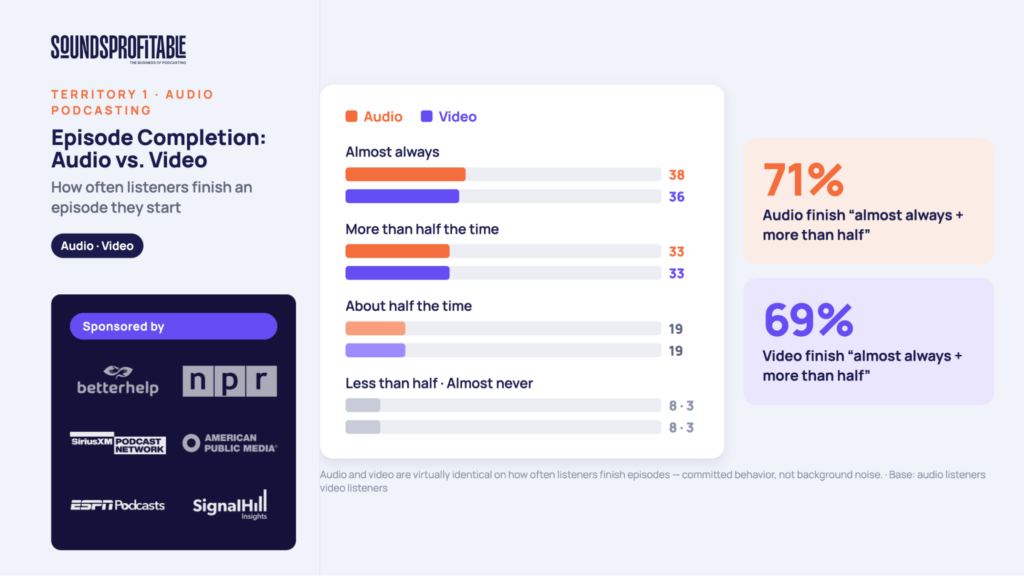
None of this would matter to an advertiser if people bailed halfway through the episode, before the ad ever arrived, but they don’t: 71% of audio listeners say they finish the episodes they start almost always or more than half the time, within a couple of points of video’s 69%. This is committed attention, the kind that’s getting harder to buy anywhere else, and it means the ad inside the episode is reaching people who are still there to hear it.
The Atlas makes a larger argument that no single territory captures the full advertising value on its own, and audio’s contribution to that system is a specific one: it builds the trust and the attention that the advertising everywhere else ends up spending. For an advertiser, audio is where persuasion actually takes hold, in the parts of the day no screen can reach.
For more, please download The Podcast Atlas here, where you can also watch the webinar where I walk you through all of the “territories” of the podcast map. Thank you as always to our wonderful research sponsors, SiriusXM Podcast Network, ESPN Podcasts, BetterHelp, NPR, and American Public Media, as well as our research partners at Signal Hill Insights.
Next week: video!
New Partners
Sounds Profitable exists thanks to the continued support of our amazing partners. Monthly consulting, free tickets to our quarterly events, partner-only webinars, and access to our 1,800+ person slack channel are all benefits of partnering Sounds Profitable.
-
Ruby is iHeartMedia's branded audio studio, crafting culturally relevant and impactful brand stories through audio, and helping brands discover their unique voice in a crowded media landscape.
Want to learn more about partnership? Hit reply or send us an email!