Ask a Marketer: How Advertisers Read the Research
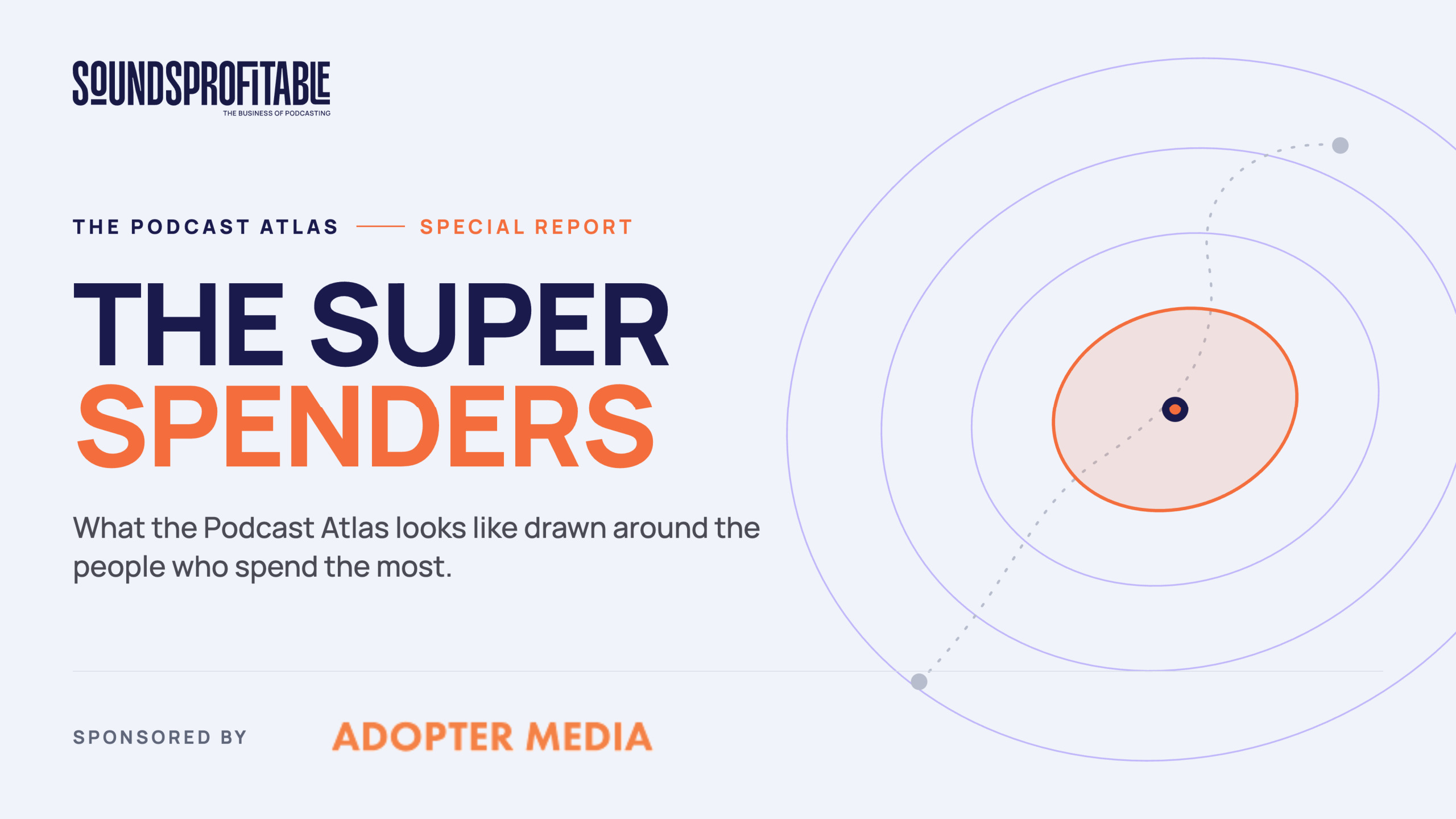
This week’s webinar puts fresh research in front of the people who buy the media. On Tuesday, August 18 at 1:00 pm ET, Right Side Up’s Krystina Rubino and Quo’s Tori Murray will join Tom Webster to work through The Podcast Atlas. Built from a survey of 5,061 U.S. consumers, the Atlas focuses on how creator-based advertising performs across audio, video, social, and newsletters. From the buyer’s chair, the two will sort which findings actually move a media plan, which are merely interesting, and how to make the case for podcast spend to people who do not follow podcasting. Grab your virtual seat now!
Spotify’s Unskippable Podcast Ads, Plus Could They Skip Yours Automatically? by James Cridland
According to Podnews reporting, Spotify has begun selling its own unskippable podcast ads, spots that Premium listeners cannot jump past even with the standard 15-second skip, with examples surfacing in shows like The Journal. This comes a week after news of the company testing a “Skip Ahead” button that would automatically skip past commonly-skipped segments like ad breaks, sponsorship segments, and intros with a single button push. Media lawyer Gordon Firemark warns that ad-skipping does not just change the episode for the listener, it changes the value proposition for sponsors. And unlike YouTube, Spotify still pays third-party podcasters nothing for the reach it resells, leaving every network that leans on the platform to weigh what its ad impressions are really worth.
Only 10 Top Podcasts Have Video? Not So Fast by Steven Goldstein
A widely shared stat claimed only 10 of the top 200 podcasts have video, and Amplifi Media’s Steven Goldstein argues that number badly undersells reality because it counted Apple Podcasts alone. His own tally finds 84% of Edison’s US Top 50 now publish full episodes on video, along with 77% of Apple’s Top 100 and 66% of Apple’s Top 200. Just six shows in the Top 50 stay genuinely audio-only, most of them public radio staples like The Daily, This American Life, and Freakonomics Radio. Goldstein’s point is that the industry is past debating whether top podcasts are going video. They already have, and the real question is where video actually improves the show.
Diverse Industries Drive Aussie Podcast Ad Spend Growth in Q2 2026
Australia’s podcast ad market is broadening well beyond the usual tech and finance buyers, according to the latest quarterly benchmark from ARN’s iHeart and Magellan AI. Alcohol led the surge at 58% quarter on quarter and 44% year on year, with automotive up 36%, home goods up 35%, financial services up 35%, and travel up 25%. Airbnb topped the advertiser rankings ahead of Wise, Shopify, Entain Group, and CommBank. News stayed the most ad-heavy genre at a 6.49% ad load, and buyers still favored the 30-second spot, which made up 39% of detected ads, with mid-roll accounting for half of all placements. The spread of categories stands as continuing evidence podcasting has matured into a mainstream buy in the Australian market.
Creators Increasingly Want to Be Everywhere: The Exclusivity Dilemma
Scalable digs into a shift reshaping creator deals, where the biggest names no longer want to be locked to a single platform. Netflix is easing away from exclusivity, with shows from Rhett & Link and Nick DiGiovanni now set to run on YouTube and Netflix at the same time. Hot Ones is reportedly in similar talks. Creators like MeatEater and Scott Galloway are also launching free ad-supported (FAST) channels on Amazon Prime Video and Roku, treating “free” as undervalued real estate. The stakes are high because audiences now spend roughly 1.7 hours a day with creator content, about 26% of their digital video time, at a median viewer age of 21 against 61 for linear TV.
Nobody Signing These Giant Podcast Deals Expects to Make the Money Back by Steve Raizes
The industry’s eye-popping podcast guarantees were never meant to pencil out as ad plays. They work instead as subscriber-acquisition campaigns for streaming platforms, which is why Jay Shetty’s On Purpose renewal reportedly landed near $100 million over three years across Spotify and Netflix, and why competition has pushed top-talent guarantees past $30 million a year. The catch for creators is that these deals expire, so podcasters who keep their IP can still be left holding valuable rights with no active distribution. Raizes concludes the smartest talent will trade peak leverage for ownership of an operating business rather than chase the biggest check.
…as for the rest of the news:
-
Podcast Movement revealed the full speaker lineup for its NYC event on September 17 and 18, with more than 80 sessions and leaders from Acast, NPR, beehiiv, and Signal Hill Insights, plus a Sounds Profitable research presentation and the official IAB Podcast Upfront after party.
-
Basis and Barometer enabled episode-level brand suitability ad targeting on podcasts, letting advertisers enforce suitability before the bid instead of leaning on blunt show-level blocks while keeping their reach.
-
AudioStack advanced its agentic advertising leadership, pushing further into AI-driven, automated ad creation and workflows.
-
AdLarge appointed industry veteran Nicole Leyden as Vice President, Brand Partnerships to accelerate its strategic brand partnerships.
-
The Podcast Academy expanded the 2027 Ambies to 35 categories, adding Best Music Podcast and Episode of the Year along with a new Listener’s Choice vote for Podcast of the Year and Best Podcast Host.
-
The Streaming Wars breaks down how Cineverse’s acquisition spree drove a 175% revenue jump while squeezing margins, as the company races to automate its Matchpoint platform and turn CTV ad tech, rights management, and licensing into profit.
-
The SMARTA Podcast marked its 100th episode as host Sonia Marta rolled out a new slate of services.